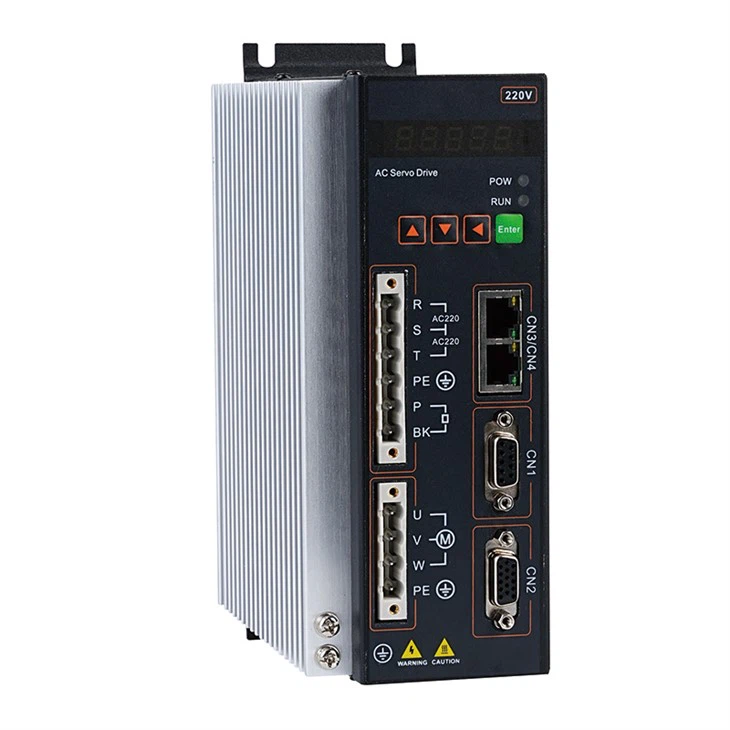
The starting current of a brushless servo amplifier is a critical parameter that significantly influences the performance and efficiency of a servo system. As a leading supplier of brushless servo amplifiers, we understand the importance of this parameter and its implications for various applications. In this blog, we will delve into the concept of starting current, its significance, factors affecting it, and how our products are designed to optimize this crucial aspect.
Understanding Starting Current
Starting current, also known as inrush current, refers to the high current that flows through a brushless servo amplifier when it is initially powered on or when the motor starts rotating from a standstill. This surge in current is typically much higher than the normal operating current and lasts for a short duration. The primary reason for this high starting current is the need to overcome the inertia of the motor and the load it is driving.
When a brushless servo motor is at rest, the magnetic fields within the motor are in a state of equilibrium. To initiate rotation, the servo amplifier must supply a large amount of current to create a strong magnetic field that can overcome the static friction and inertia of the motor and the load. This high current generates the necessary torque to start the motor and gradually bring it up to its operating speed.
Significance of Starting Current
The starting current of a brushless servo amplifier has several important implications for the performance and reliability of a servo system. Here are some key points to consider:
- Motor Performance: The starting current directly affects the torque output of the motor during startup. A higher starting current can provide more torque, allowing the motor to accelerate more quickly and overcome heavy loads. However, excessive starting current can also cause overheating and damage to the motor windings, reducing its lifespan and performance.
- Power Supply Requirements: The high starting current places a significant demand on the power supply. If the power supply is not capable of providing sufficient current during startup, it can lead to voltage drops, which can affect the stability and performance of the servo system. In some cases, inadequate power supply can even cause the servo amplifier to malfunction or shut down.
- Electrical System Design: The starting current must be taken into account when designing the electrical system for a servo application. This includes selecting the appropriate power supply, wiring, and protection devices to ensure that the system can handle the high current surge without any issues.
Factors Affecting Starting Current
Several factors can influence the starting current of a brushless servo amplifier. Understanding these factors can help in optimizing the design and operation of the servo system. Here are some key factors to consider:
- Motor Inertia: The inertia of the motor and the load it is driving is one of the primary factors affecting the starting current. A higher inertia requires more torque to start the motor, resulting in a higher starting current. Therefore, it is important to select a motor with an appropriate inertia rating for the specific application.
- Load Characteristics: The nature of the load can also have a significant impact on the starting current. For example, a load with high static friction or a large moment of inertia will require more torque to start, resulting in a higher starting current. On the other hand, a load with low friction and a small moment of inertia will require less torque and, therefore, a lower starting current.
- Acceleration Rate: The acceleration rate of the motor during startup also affects the starting current. A higher acceleration rate requires more torque, resulting in a higher starting current. Therefore, it is important to select an appropriate acceleration rate based on the application requirements and the capabilities of the servo amplifier.
- Servo Amplifier Design: The design of the servo amplifier itself can also influence the starting current. Some servo amplifiers are designed to limit the starting current to protect the motor and the power supply. These amplifiers use techniques such as soft-starting and current limiting to gradually increase the current during startup, reducing the peak starting current.
Our Brushless Servo Amplifiers and Starting Current Optimization
At our company, we are committed to providing high-quality brushless servo amplifiers that are designed to optimize the starting current and ensure reliable and efficient operation. Here are some features of our products that help in achieving this:
- Advanced Current Control Algorithms: Our servo amplifiers are equipped with advanced current control algorithms that can precisely regulate the starting current. These algorithms can detect the motor's position and speed and adjust the current accordingly to provide the optimal torque during startup.
- Soft-Starting Function: Many of our servo amplifiers feature a soft-starting function that gradually increases the current during startup, reducing the peak starting current. This not only protects the motor and the power supply but also reduces the stress on the mechanical components of the system.
- Current Limiting Protection: Our servo amplifiers are designed with built-in current limiting protection to prevent excessive current flow during startup and under abnormal operating conditions. This helps in protecting the motor and the servo amplifier from damage and ensures reliable operation.
- Customizable Parameters: We understand that different applications have different requirements for starting current. Therefore, our servo amplifiers offer a wide range of customizable parameters that allow users to adjust the starting current and other performance parameters to suit their specific needs.
Applications and Considerations
Brushless servo amplifiers are widely used in various applications, including robotics, automation, machine tools, and aerospace. Each application has its own unique requirements for starting current, and it is important to consider these requirements when selecting a servo amplifier. Here are some examples of different applications and the considerations for starting current:
- Robotics: In robotics applications, the starting current is crucial for ensuring smooth and precise movement of the robot's joints. A high starting current can provide the necessary torque to quickly accelerate the joints and overcome the inertia of the robot's arms and end-effectors. However, excessive starting current can also cause vibrations and instability in the robot's movement. Therefore, it is important to select a servo amplifier that can provide the optimal starting current for the specific robot design and application requirements.
- Automation: In automation applications, such as conveyor systems and packaging machines, the starting current is important for ensuring reliable and efficient operation. A high starting current can help in quickly starting the motors and bringing the system up to its operating speed. However, excessive starting current can also cause voltage drops and affect the performance of other components in the system. Therefore, it is important to select a servo amplifier that can provide the necessary starting current while minimizing the impact on the power supply and the electrical system.
- Machine Tools: In machine tool applications, the starting current is critical for ensuring accurate and precise machining operations. A high starting current can provide the necessary torque to quickly start the spindle and other moving parts of the machine tool. However, excessive starting current can also cause tool wear and damage to the workpiece. Therefore, it is important to select a servo amplifier that can provide the optimal starting current for the specific machine tool design and machining requirements.
Conclusion
The starting current of a brushless servo amplifier is a critical parameter that significantly affects the performance and reliability of a servo system. By understanding the concept of starting current, its significance, and the factors that influence it, you can make informed decisions when selecting a servo amplifier for your application. At our company, we offer a wide range of high-quality brushless servo amplifiers that are designed to optimize the starting current and ensure reliable and efficient operation. If you are interested in learning more about our products or have any questions about starting current, please feel free to contact us for a consultation. We look forward to working with you to meet your servo system requirements.