

Servo Motors and Drives
From Design to Mass Production — One-Stop Servo Motor & Drive Manufacturer You Can Trust.
High-precision control, stable performance, fast response, and customization support.

| Servo drive model | model | Pulse input | Analog quantity | With feedback | RS485 | CANOpen | M2 Bus | M3 Bus | EtherCAT |
| Double plate pulse type | √ | √ | √ | √ | ○ | ○ | ○ | ○ | |
| Single board 17/23 bit absolute value type | √ | √ | √ | √ | ○ | ○ | ○ | ○ | |
| Single-board pulse incremental type | √ | √ | √ | √ | ○ | ○ | ○ | ○ | |
| 485 Absolute value type | √ | √ | √ | √ | ○ | ○ | ○ | ○ | |
| M2 Bus Type | ○ | ○ | ○ | ○ | ○ | √ | ○ | ○ | |
| M3 Bus Type | ○ | ○ | ○ | ○ | ○ | ○ | √ | ○ | |
| EtherCAT Type | ○ | ○ | ○ | ○ | ○ | ○ | ○ | √ | |
| CANOpen Type | ○ | ○ | ○ | ○ | √ | ○ | ○ | ○ | |
| Spindle type | √ | √ | √ | √ | ○ | ○ | ○ | ○ | |
| Maxim Pulse | √ | √ | √ | ○ | ○ | ○ | ○ | ○ | |
| Wide pulse type | √ | ○ | ○ | ○ | ○ | ○ | ○ | ○ | |
| Dual-plate 17/23-bit absolute value type | √ | √ | √ | √ | ○ | ○ | ○ | ○ | |
| √ means standard configuration, ○ means not configured | |||||||||
Product Series and Selection Guide


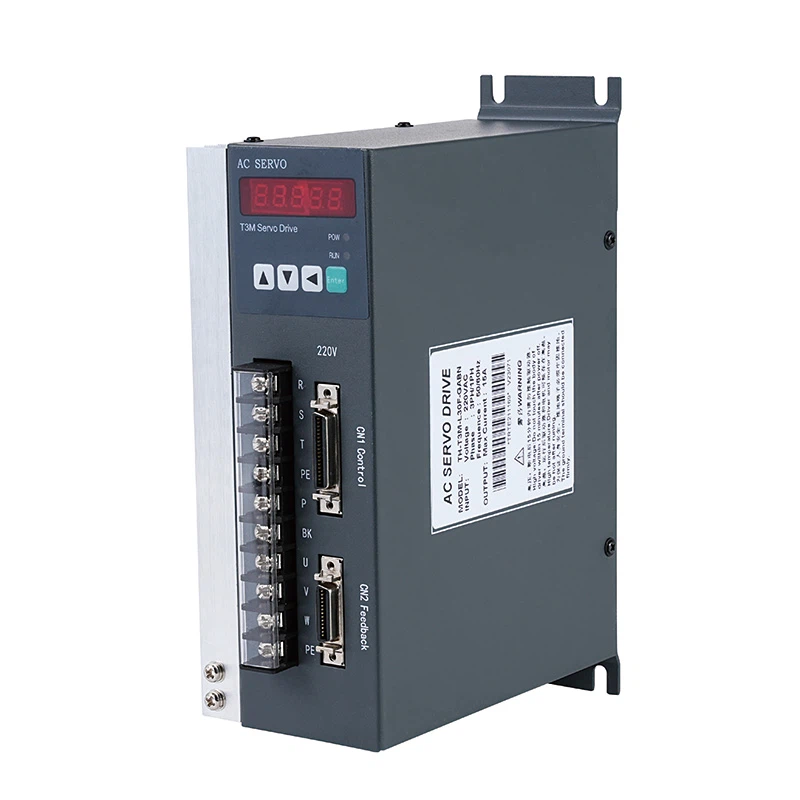
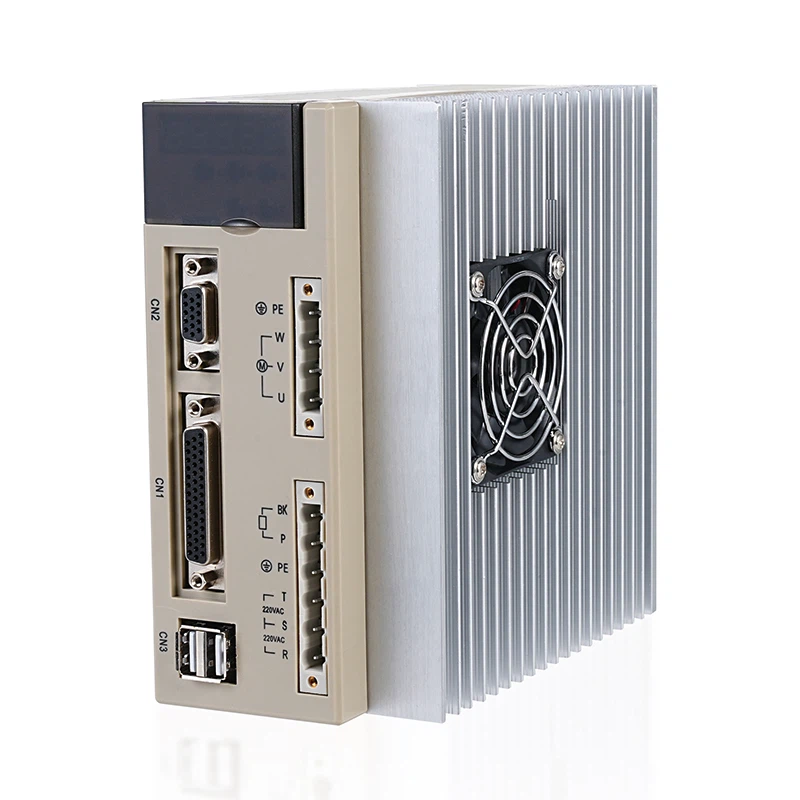
-
![550W 3000rpm Servo Drives Servo Motor]() 550W 3000rpm Servo Drives Servo MotorThe 550W 3000rpm Servo Drives Servo Motor combines high-performance permanent magnet synchronous motor engineering with Tonghang’s T3DC CANopen fieldbus architecture, delivering responsive...read more
550W 3000rpm Servo Drives Servo MotorThe 550W 3000rpm Servo Drives Servo Motor combines high-performance permanent magnet synchronous motor engineering with Tonghang’s T3DC CANopen fieldbus architecture, delivering responsive...read more -
![50W AC Servo Motor Drive]() 50W AC Servo Motor DriveThe 50W AC Servo Motor Drive is an ultra-compact, high-performance digital motion control solution developed by Tonghang for micro-automation systems, delivering sub-millisecond dynamic response,...read more
50W AC Servo Motor DriveThe 50W AC Servo Motor Drive is an ultra-compact, high-performance digital motion control solution developed by Tonghang for micro-automation systems, delivering sub-millisecond dynamic response,...read more -
![2kw AC Servo Motor Drive Controller]() 2kw AC Servo Motor Drive ControllerThe 2kw AC Servo Motor Drive Controller, built on Zhejiang Tonghang E-Drive’s servo technology, delivers precise position control, stable speed regulation and fast torque response. Paired with AC...read more
2kw AC Servo Motor Drive ControllerThe 2kw AC Servo Motor Drive Controller, built on Zhejiang Tonghang E-Drive’s servo technology, delivers precise position control, stable speed regulation and fast torque response. Paired with AC...read more -
![750W 220V Servo Motor Drive]() 750W 220V Servo Motor DriveThe 750W 220V Servo Motor Drive is a high-performance single-phase AC220V servo system from Zhejiang Tonghang E-Drive Technology Co., Ltd., paired with an 80AST-A1C02430 servo motor and 17-bit...read more
750W 220V Servo Motor DriveThe 750W 220V Servo Motor Drive is a high-performance single-phase AC220V servo system from Zhejiang Tonghang E-Drive Technology Co., Ltd., paired with an 80AST-A1C02430 servo motor and 17-bit...read more -
![0.75kW Permanent Magnet Electric Servo Drive]() 0.75kW Permanent Magnet Electric Servo DriveThe 0.75kW Permanent Magnet Electric Servo Drive from Zhejiang Tonghang E-Drive Technology Co., Ltd. belongs to the T3D general servo series. Equipped with a high-performance ARM chip and...read more
0.75kW Permanent Magnet Electric Servo DriveThe 0.75kW Permanent Magnet Electric Servo Drive from Zhejiang Tonghang E-Drive Technology Co., Ltd. belongs to the T3D general servo series. Equipped with a high-performance ARM chip and...read more -
![Servo Motor AC Drive For Packing Machine]() Servo Motor AC Drive For Packing MachineThe T5a series Servo Motor AC Drive For Packing Machine, an absolute AC servo drive independently developed and manufactured by Zhejiang Tonghang Motor Drive Technology Co., Ltd., is...read more
Servo Motor AC Drive For Packing MachineThe T5a series Servo Motor AC Drive For Packing Machine, an absolute AC servo drive independently developed and manufactured by Zhejiang Tonghang Motor Drive Technology Co., Ltd., is...read more -
![2kw Single-Axis Servo Drive]() 2kw Single-Axis Servo DriveEngineered for dynamic motion applications, the 2KW Single-Axis Servo Drive is a high-performance controller designed for precise positioning, speed control, and torque efficiency. Featuring an...read more
2kw Single-Axis Servo DriveEngineered for dynamic motion applications, the 2KW Single-Axis Servo Drive is a high-performance controller designed for precise positioning, speed control, and torque efficiency. Featuring an...read more -
![5.5kw High Performance Servo Motor Drive]() 5.5kw High Performance Servo Motor DriveThe 5.5kW High Performance Servo Motor Drive is built by Zhejiang Tonghang E-Drive Technology Co., Ltd., a National High-Tech Enterprise specializing in industrial drive R&D, manufacturing and...read more
5.5kw High Performance Servo Motor DriveThe 5.5kW High Performance Servo Motor Drive is built by Zhejiang Tonghang E-Drive Technology Co., Ltd., a National High-Tech Enterprise specializing in industrial drive R&D, manufacturing and...read more -
![0.75KW Industrial AC Servo Motor Drive]() 0.75KW Industrial AC Servo Motor DriveThe 0.75KW Industrial AC Servo Motor Drive is a high-performance motion control solution manufactured by Zhejiang Tonghang E-Drive Technology Co., Ltd., a National High-Tech Enterprise established...read more
0.75KW Industrial AC Servo Motor DriveThe 0.75KW Industrial AC Servo Motor Drive is a high-performance motion control solution manufactured by Zhejiang Tonghang E-Drive Technology Co., Ltd., a National High-Tech Enterprise established...read more -
![Rapid Door Servo Motor Controller]() Rapid Door Servo Motor ControllerThe rapid door servo control system is a dedicated closed-loop servo drive solution for industrial high-speed rolling doors. Composed of a servo control box and RV63 servo motor, it achieves...read more
Rapid Door Servo Motor ControllerThe rapid door servo control system is a dedicated closed-loop servo drive solution for industrial high-speed rolling doors. Composed of a servo control box and RV63 servo motor, it achieves...read more -
![Automatic Door Servo Drive System]() Automatic Door Servo Drive SystemThe automatic door servo drive system features a complete closed-loop servo drive assembly—comprising a servo control unit and an RV63 servo motor—that precisely regulates opening and closing...read more
Automatic Door Servo Drive SystemThe automatic door servo drive system features a complete closed-loop servo drive assembly—comprising a servo control unit and an RV63 servo motor—that precisely regulates opening and closing...read more -
![High Speed Door Servo Drive]() High Speed Door Servo DriveManufactured by Zhejiang Tonghang E-Drive, this dedicated high speed door servo drive kit consists of a matched intelligent control cabinet and permanent magnet brake servo motor, adopting...read more
High Speed Door Servo DriveManufactured by Zhejiang Tonghang E-Drive, this dedicated high speed door servo drive kit consists of a matched intelligent control cabinet and permanent magnet brake servo motor, adopting...read more


Servo Motor
A servo motor is a type of motor that can achieve precise position, speed, and torque control based on control signals in automated control systems. Servos offer high precision, performance, and stability, making them widely used in applications requiring precise motion control. Servo motors typically provide real-time position and speed feedback through a feedback device (such as an encoder or sensor), enabling timely adjustment of control signals based on actual conditions to maintain the motor's precise position. Servo motors are generally categorized into three types: DC servo motors, AC servo motors, and stepper servo motors.
DC servo motors are a type of motor widely used in automated control systems. Compared to conventional DC motors, they feature a closed-loop control system, enabling real-time adjustment of control signals based on feedback signals. DC servo motors offer higher speeds and response speeds, as well as greater torque output. However, they require a more stable power supply.
AC servo motors consist of a stator winding and a rotating armature. The stator winding typically generates a magnetic field, while the rotating armature carries the load and rotates. Electric motors operate by rotating a coil of wire in a magnetic field. AC servo motors achieve efficient and accurate motion control through different combinations of current and magnetic field. AC servo motors offer high speed, high precision, and high torque output, making them suitable for applications requiring high-performance motion control, such as robotics, automation equipment, and CNC machine tools. However, compared to DC motors, AC servo motors generally require more complex control systems and are generally more expensive.
Servo Drives
A servo drive is a device used to control the motion of a servo motor and is an indispensable component of a servo system. It is typically used in conjunction with a servo motor to achieve precise position, speed, and force control. Servo drives typically integrate various control algorithms to precisely adjust the motor's speed and position based on control signals. They support encoder feedback, enabling real-time monitoring of the motor's position and speed, achieving closed-loop control and improving control accuracy and stability. They are also equipped with various communication interfaces to communicate with a host computer or other devices, enabling remote monitoring and control. Servo drives also include various protection features, such as overcurrent, overtemperature, overvoltage, and phase loss protection, to ensure that the motor and drive operate within safe ranges. The primary function of a servo drive is to receive control signals and, using internal control algorithms, convert them into current to control the servo motor, thereby achieving precise position control.
With the rapid development of power electronics technology and modern control theory, fully digital servo drive systems have become mainstream. Servo drives are also moving towards high precision, high performance, integration, modularization, universality, networking, and intelligence.
1) High Precision and High Performance
Typically, servo drives often use high-speed microcontrollers as their core processors to enhance computing speed and processing power. With the increasing accuracy of encoders, the performance and control accuracy of servo drives at low speeds have improved, making them particularly popular in high-precision industrial robotics. The introduction of advanced control methods and strategies, such as advanced nonlinear control and parameter identification and self-tuning, has further enhanced the performance of servo drives.
2) Integration and Modularity
With the miniaturization of industrial robots and the continuous advancement of semiconductor technology, servo drives and motors are moving towards miniaturization, integration, and integration. This trend has significantly increased the computing power of servo controllers, with integrated ARM, DSP, and FPGA controllers becoming mainstream.
Modularity involves dividing servo drives into modules based on their functions and combining them to meet specific needs. Modularity requires developing and designing individual modules, which can then be combined to meet specific needs, reducing design costs. Modularity also increases system flexibility and facilitates maintenance of servo drive systems.
3) Universalization
Universalization integrates the various functions of a servo drive, allowing users to control various operating modes, such as closed-loop vector control, motor control, and open-loop vector control, without changing the hardware configuration, enabling its application in diverse working environments.
Currently, universal servo drives are relatively expensive and still lack optimal application in certain applications. Therefore, the design of specialized servo drives is necessary to reduce costs and achieve miniaturization.
4) Networking
With the continuous advancement of industrial technology and the increasing demands placed on industrial environments, fieldbus communication technologies such as RS485 and CAN, often characterized by poor real-time communication and low communication speeds, are increasingly unable to meet the demands of modern industrial production. Consequently, industrial Ethernet bus technologies, such as EterCAT, are beginning to be applied in server-driven systems. Industrial Ethernet bus technologies can meet real-time control requirements and are widely used in the industrial control industry.
5) Intelligence
In the field of industrial robotics, intelligence is currently a major trend in the development of servo drives. Through intelligent control strategies, servo drives possess artificial intelligence features such as self-adaptation and self-learning. The intelligence of servo drives simplifies and significantly reduces debugging time for industrial robots. It also significantly lowers the technical requirements for debugging personnel, thereby reducing operating costs.
Driver Hardware Design
As a leading servo driver manufacturer, Tonghang's products primarily consist of hardware components including control chips, driver circuits, power supply circuits, voltage detection circuits, current sampling circuits, communication interface circuits, and encoder interface circuits. These circuits enable the various functions of the servo driver and ensure stable and reliable system operation. Therefore, in servo driver hardware research, the analysis and integration of each circuit are crucial.
1. Chip Selection
The hardware control circuit plays a crucial role in a servo drive. It is primarily responsible for sampling analog signals, counting motor encoder pulses, and outputting PWM waveforms to control the inverter circuit through a control algorithm, thereby achieving precise control of the servo motor.
As the core component of a servo drive controller, the control circuit fulfills multiple functions:
1) Fast Response: The control circuit must be able to quickly respond to sensor feedback signals and control algorithm instructions to achieve fast and accurate motor control.
2) High Reliability: The control circuit must undergo rigorous design and testing to ensure stable and reliable operation, safeguarding the safety and stability of the entire system.
3) High-Speed Computing: The implementation of the control algorithm requires a large amount of high-speed data processing, so the control circuit chip must possess high-performance processing capabilities and computing speed.
4) High-Precision Control: To achieve high-precision motor control, the control circuit requires high-precision data processing capabilities to ensure the accuracy and precision of the control algorithm. 5) Real-time monitoring: The control circuit needs to be able to monitor and feedback various indicators of the motor in real time, so as to detect and handle abnormal situations in time and protect the normal operation of the motor and the system. Therefore, for the chip selection of the control circuit, it is necessary to fully consider the above requirements to ensure that the control circuit can stably, accurately and efficiently achieve precise control of the servo motor and ensure the stable operation of the entire system.
2. Output Drive Circuit
The servo drive's output drive circuit is a key component that converts control signals into motor motion. It consists of a three-phase half-bridge drive circuit composed of six N-channel MOS transistors. The output drive circuit also includes a current feedback circuit, which splits the output current into two paths and transmits them to a differential current sampling circuit. This circuit then feeds back to the control system, completing closed-loop control.

3. Differential Current Sampling Circuit
Differential current sampling circuits are commonly used to measure and acquire changes in servo motor phase current signals. This circuit is crucial for the control and protection of servo drives. The motor phase current signals measured by the differential current sampling circuit are the primary input parameters required to drive the motor and directly reflect the motor's load and operating status. Servo drives employ closed-loop control systems to achieve precise control of servo motor motion. The differential current sampling circuit provides feedback signals, which are used to adjust the motor's output current to achieve the desired motion characteristics and position. The differential current sampling circuit diagram is shown in the figure. The following is the differential current sampling process.
First, the current sensor converts the motor's phase current into a current signal. These current signals represent the current consumed by the motor during operation. Next, a differential current sampling circuit splits the current signal into two paths and performs a differential measurement between the two paths to obtain the difference between the current signals. This differential signal is then processed by an operational amplifier. The operational amplifier in the differential current sampling circuit amplifies the differential signal, converts the current to voltage, and improves the signal amplitude and stability. Finally, the processed signal serves as the input to the feedback control system. By comparing the feedback signal with the set value, the control system adjusts the motor output to achieve the desired motion state.

4. Encoder Power Supply Circuit
The servo motor's encoder requires a separate power supply. To ensure proper operation and accurate position feedback, it must be supplied with an appropriate power supply. The servo motor encoder selected by TONGHANG uses a 5V power supply, so the encoder power supply circuit must step down the incoming power supply to ensure stable and reliable operation and accurate position feedback signals.

The encoder power supply circuit is shown in the figure. After connecting to an external 24V DC power supply, the input power first passes through multiple parallel capacitors. These capacitors reduce noise and ripple in the input power supply and stabilize the voltage. A DC-DC step-down regulator chip then performs the first step-down, reducing the power supply voltage to 8V. The resulting 8V voltage has two destinations: first, it is used as the power supply for the output driver circuit; second, after filtering and stabilizing the voltage through multiple parallel capacitors, the regulator stabilizes the input 8V voltage to a +5V output voltage. The linear regulator chip uses internal circuitry to stabilize the input voltage to the specified output voltage. This regulator outputs a fixed +5V voltage.
5. Network Interface Circuit
The network interface circuit is an Ethernet interface circuit that connects computers or network devices, carrying the communication function between the slave and the master. Communication between the slave and master requires an external network cable. However, although the slave controller has a PHY interface, it cannot be directly connected to the network cable interface. Therefore, an additional network cable interface is required to connect the network cable to communicate with the master.

The TONGHANG series Ethernet ports are typically designed for high-frequency signal transmission and processing, offering high performance and stability. The port's built-in magnetic network transformer enhances signal transmission and stability during data transmission, preventing external interference and electrical noise from reaching the device. Built-in capacitors and resistors also filter and isolate signals, further improving signal stability and interference resistance.
6. Encoder Interface Circuit
The encoder is a key component in a servo system, providing position and speed feedback. The encoder outputs pulse signals that represent motor rotation. The encoder interface circuit interprets these pulse signals and converts them into information such as the motor's actual position and speed. The encoder interface circuit also supplies the encoder with 5V power, which is stepped down by the encoder power supply circuit, ensuring a stable power supply during operation.

The servo motor's encoder is an incremental encoder. This encoder generates pulse signals to indicate changes in position. These pulse signals consist of phases A, B, and Z. Phases A and B are used to measure position and direction, while phase Z is typically used to identify a reference point or zero position.
7. USB-to-Serial Circuit
A USB-to-serial circuit enables communication between a servo drive and a computer. As the core component of the entire circuit, it converts data received from the USB interface into a serial format and sends the serial data to the servo drive, and vice versa. The USB-to-serial circuit is shown in the figure.

8. Brake Interface Circuit
The brake interface circuit controls the servo motor's braking action, enabling it to stop quickly and accurately. The brake interface circuit receives brake control signals or brake release signals and converts them into appropriate control signals to activate or deactivate the servo drive's braking action. The brake interface circuit is shown in the figure. The operational amplifier (op amp) in the figure is a key component of the brake interface circuit. When interference signals enter the brake signal, the op amp, combined with a filter circuit, filters the input signal, removing interference and retaining the valid portion of the brake signal. The op amp also performs multiple functions, including signal amplification, comparison, and conditioning.

9. Power Supply Voltage Detection Circuit
The power supply voltage detection circuit monitors the power supply voltage level to ensure it remains stable within the specified operating range. By monitoring the power supply voltage in real time, the power supply voltage detection circuit helps improve system safety and reliability. Figure 13 shows the power supply voltage detection circuit. After voltage division, the voltage on the 22Q is sampled through the ADC sampling port. Software then calculates whether the actual voltage meets the required voltage. Only when the voltage value is normal can the servo drive operate normally.

10. LED Circuit and Switch Circuit
A switch circuit is added to verify the slave's IO input functionality, while an LED circuit verifies its IO output functionality. As shown in the figure, the switch circuit is connected to a 3.3V voltage. A resistor is added to the circuit to eliminate mechanical vibration. In the LED circuit design shown in the figure, one end of the LED is connected to GND, and the other end can be illuminated by simply outputting a high level from a microprocessor pin. The LED operates at 1.2V, and a step-down circuit is used to step down the 3.3V voltage. The step-down circuit is shown in Figure 15. The 3.3V step-down circuit, designed using an AMS117 voltage regulator chip, generates a 1.2V voltage for the LED circuit.


11. Temperature Measurement Circuit
The temperature value is sampled and processed by an NTC (Negative Temperature Coefficient) temperature sensor, which is connected to the ADC. An NTC is a negative temperature coefficient thermistor whose resistance decreases as temperature increases. Since the resistance of an NTC changes exponentially with temperature, the temperature can be inferred by measuring the resistance. When current passes through an NTC temperature sensor, it generates a certain amount of heat. If this heat cannot be dissipated in time, the temperature of the NTC temperature sensor will rise, causing its resistance to decrease. In this case, the current will increase significantly, causing the temperature of the NTC temperature sensor to rise further, forming a vicious cycle that can eventually lead to overheating of the NTC temperature sensor, even causing it to burn or catch fire.

12. Hardware Implementation
Hardware implementation primarily involves the servo drive. A diagram of the servo drive is shown in the figure.

Tonghang conducted a detailed design of the servo drive hardware and completed its hardware implementation. He conducted in-depth research on each module, including the microcontroller, slave controller, drive circuit, differential current sampling circuit, encoder interface circuit, and network cable interface circuit. He also demonstrated the actual circuit board.
As one of the leading servo motors and drives manufacturers and suppliers in China, we warmly welcome you to buy the best servo motors and drives at competitive price from our factory. For more company information, contact us now.
AC Servo Motor Driver, AC Servo Motors and Drives, Brushless Servo Amplifier