

Industrial automation systems rely heavily on precision, stability, and long-term operational efficiency. Whether you are building CNC machinery, packaging equipment, textile machines, robotics, or automated production lines, choosing the right AC servo drive manufacturer can directly impact machine performance, maintenance costs, and production uptime.
Today's automation market offers many suppliers, but not every manufacturer can provide consistent quality, technical support, and customization capabilities. This guide explains the key factors buyers should evaluate before selecting a reliable partner for servo drive solutions.
What Is an AC Servo Drive?
An AC servo drive is an advanced electronic controller used to regulate the speed, torque, and position of servo motors in industrial automation systems. It receives command signals from the control system and converts them into precise motor movements for high-accuracy applications.
AC servo drives are widely used in CNC machinery, robotics, packaging systems, textile equipment, conveyor lines, printing machines, and automated manufacturing systems where stable motion control and positioning accuracy are critical.
Precision Control
Provides accurate speed, torque, and positioning performance for industrial motion systems.
Fast Response
Supports rapid acceleration and dynamic motion control for automated machinery.
Wide Applications
Suitable for robotics, CNC equipment, packaging lines, textile systems, and more.
Why Choosing the Right Manufacturer Matters
A servo drive is not just a standard electronic component. It is the core of motion control performance. An unreliable supplier may lead to:
- Unstable positioning accuracy
- Frequent machine downtime
- Communication incompatibility
- Poor after-sales support
- Limited customization
- High replacement costs
For industrial automation projects, long-term stability is often more important than low purchase price.
Community discussions among automation engineers also highlight the importance of long-term maintainability, software compatibility, and technical support when selecting servo drive suppliers.
Key Factors to Evaluate When Choosing an AC Servo Drive Manufacturer
Technical R&D Capability
A reliable manufacturer should have strong independent research and development capabilities.
Look for companies that offer:
- Self-developed control algorithms
- Digital vector control technology
- High-speed response systems
- Stable encoder feedback systems
- Continuous product innovation
Manufacturers with strong engineering teams can usually provide better customization and faster technical support for complex automation projects.
For example, Zhejiang Tonghang E-Drive Technology focuses on independent R&D and advanced digital control technologies for industrial motion systems.
Product Stability and Reliability
Industrial automation environments are demanding. Servo drives must withstand:
- Continuous operation
- Electrical interference
- Temperature fluctuations
- Heavy loads
- High-speed cycles
Reliable manufacturers usually implement:
- Industrial-grade IPM modules
- Fully sealed designs
- Strong overload capability
- Anti-interference protection
- Strict quality inspection procedures
According to Tonghang E-Drive Technology product information, their T3a/T3L and T5a series use industrial-grade modules and advanced control systems for high reliability and positioning precision.
Product Range and Customization Ability
Different industries require different motion control solutions.
A qualified supplier should provide:
- General-purpose servo drives
- High-precision absolute servo drives
- Spindle servo systems
- Compact integrated designs
- Multiple communication protocols
- OEM/ODM customization
This flexibility helps equipment manufacturers optimize machine design while reducing integration complexity.


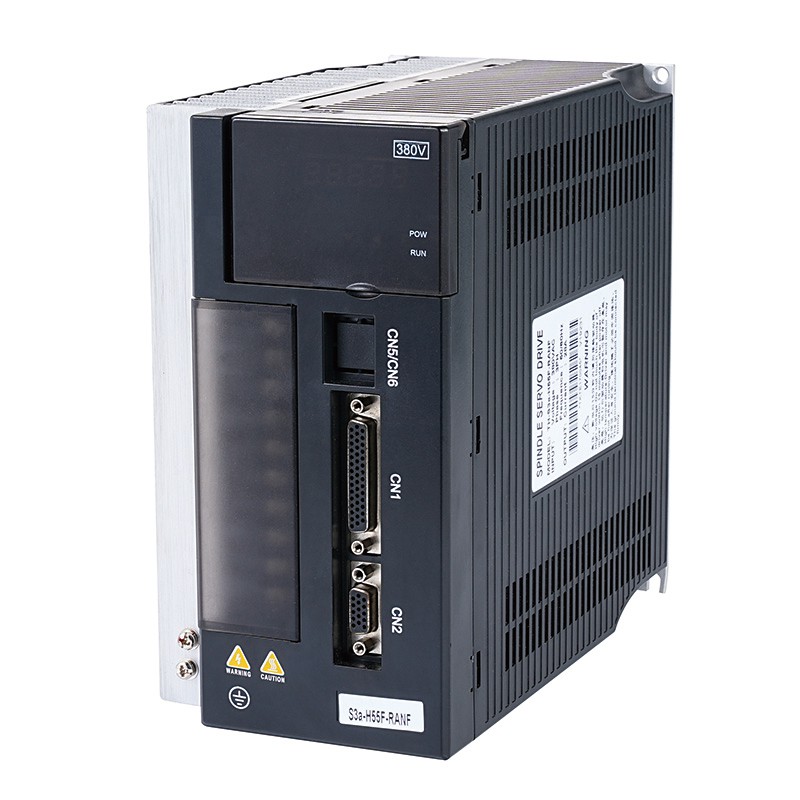
Why Many Equipment Manufacturers Choose Tonghang E-Drive Technology
Zhejiang Tonghang E-Drive Technology Co., Ltd. is a professional industrial motion control manufacturer specializing in AC servo drives, servo systems, and automation solutions.
Company Advantages
1. Independent Technology Development
The company develops its own digital control systems and vector control technologies for industrial automation applications.
2. Wide Industry Experience
Its servo products are widely used in:
- CNC equipment
- Packaging machinery
- Textile systems
- Automated production lines
- Industrial processing machines
3. Strong Manufacturing Capability
The company integrates:
- Research & development
- Production
- Sales
- Technical support
This complete manufacturing structure helps ensure product consistency and faster customer response.
4. Flexible Customization Support
Zhejiang Tonghang E-Drive Technology Co., Ltd. provides customized motion control solutions for OEM manufacturers and industrial automation integrators.
How to Compare Different Servo Drive Manufacturers
| Evaluation Factor | Why It Matters |
|---|---|
| R&D capability | Determines innovation and long-term competitiveness |
| Product stability | Reduces downtime and maintenance costs |
| Communication compatibility | Ensures easy PLC and controller integration |
| Customization ability | Supports different machine requirements |
| Technical support | Improves project implementation efficiency |
| Delivery capability | Helps avoid production delays |
| Industry experience | Reduces project risks |
Common Problems Caused by Low-Quality Servo Drives
Choosing low-cost suppliers without proper evaluation may lead to:
- Motor vibration
- Positioning deviation
- Communication instability
- Frequent alarms
- Poor heat dissipation
- Short service life
In industrial automation projects, downtime costs are often much higher than the initial component savings.
FAQ
1. What industries commonly use AC servo drives?
AC servo drives are widely used in CNC machines, robotics, packaging systems, textile machinery, conveyors, and automated production lines.
2. What is the difference between a servo drive and a VFD?
A servo drive provides precise position, speed, and torque control, while a VFD mainly controls motor speed without high-precision positioning.
3. Why is encoder feedback important?
Encoder feedback allows the servo system to monitor motor position accurately and correct motion errors in real time.
4. What communication protocols should industrial servo drives support?
Common protocols include RS485, EtherCAT, CANopen, Modbus, and pulse control interfaces.
5. How important is overload capability?
Strong overload capability helps maintain stable operation during sudden load changes or high-speed acceleration.
6. Can servo drives be customized for OEM projects?
Yes. Many professional manufacturers provide customized voltage ranges, communication protocols, control modes, and software adjustments.
7. What should I check before selecting a supplier?
Evaluate product reliability, technical support, delivery capability, certifications, and long-term service support.
8. Are compact servo drives suitable for small machines?
Yes. Compact designs help reduce installation space and improve machine integration flexibility.
9. What causes servo system instability?
Common reasons include incorrect parameter settings, insufficient drive quality, poor wiring, or incompatible motor matching.
10. How can I improve servo system lifespan?
Use proper cooling, stable power supply, regular maintenance, and high-quality servo drive components from reliable manufacturers.
Looking for Reliable AC Servo Drive Solutions?
Zhejiang Tonghang E-Drive Technology Co., Ltd. provides high-performance motion control solutions for CNC machines, packaging systems, textile equipment, robotics, and industrial automation projects worldwide.
Get a Free Quote in 24 Hours