

In the field of customized industrial automation, servo drives are no longer just "general-purpose components"-more and more customers want servo drive solutions that perfectly match their equipment needs through OEM/ODM processes. In response to this trend, we've decided to provide a reliable roadmap, outlining the complete process from parameter matching to prototype development, small-batch trial production, and mass production delivery from a professional perspective. This will help you quickly solve your problems.
Requirements Analysis and Parameter Matching
1. Confirm Equipment Usage Scenarios
You need to clarify the application background of the equipment with the supplier (such as Tonghang):
- Which type of equipment is the drive system used for: CNC machine tools, high-speed doors, logistics sorting, electronic semiconductor equipment, packaging equipment, etc.? (Our website has various application cases for MotionControl, high-speed doors, electronic semiconductors, etc.)
- System operating voltage/power supply type (e.g., AC380V, AC220V, DC24V or high-voltage DC)
- Servo motor power, rated current/speed, inertia ratio, encoder type (incremental/absolute) required for the drive
- Control communication protocol requirements (e.g., CANopen, EtherCAT, Modbus, EtherNet/IP, etc.)
- Installation space, heat dissipation conditions, environmental requirements (temperature, humidity, dust, vibration)
2. Parameter Matching
Based on requirements, suppliers typically provide a parameter matching table, which mainly includes:
- Rated input voltage and power range (corresponding to driver size)
- Output current/voltage capability/peak current capability
- Control accuracy indicators (e.g., speed control bandwidth, positioning accuracy, anti-interference capability)
- Compatible motor parameters (rated power, rated current, speed, maximum speed, encoder type)
- Communication interface and protocol support
- Installation dimensions (width × height × depth), heat dissipation method (air cooling/natural cooling), protection level
- Safety regulations and certifications (CE, UL, CCC, etc.)
- Through the above matching, you and the supplier can reach a "Driver Specification Confirmation Agreement," clearly defining the driver specifications for OEM/ODM use.
Tip: During the matching stage, it is recommended to ask the supplier to provide similar successful cases or parameter guarantees to ensure that the customized driver meets the standards in actual operation (Tonghang, as a servo driver manufacturer with over 10 years of experience, has countless rich case studies to share).


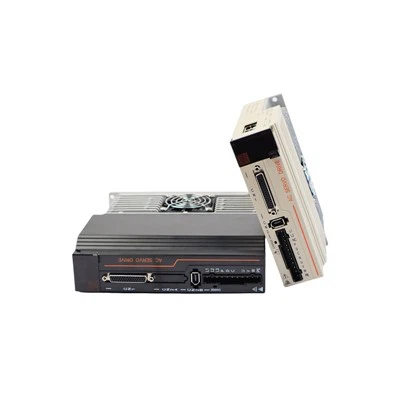
Prototype Development and Verification
1. Prototype Design
After specifications are confirmed, the supplier will enter the prototype phase, which includes:
Drive hardware board/prototype production: This includes power component selection, PCB layout, power module, control module, and heat dissipation structure.
Firmware/Software Development: Develop the drive's internal control logic, protection functions, communication interface drivers, and parameter configuration interface based on protocol requirements (such as EtherCAT and Modbus).
Appearance and Mounting Interface: For OEM/ODM designs, customization of the housing, brand logo, mounting holes, and terminal block locations may be required.
2. Prototype Testing and Validation
The validation phase is crucial and includes, but is not limited to:
- Power Testing: Full load, peak load, long-term operation, thermal stability testing.
- Control Performance Testing: Speed response time, positioning error, speed stability, encoder response.
- Impact Resistance Testing: Power supply fluctuations, external EMI/ESD, short circuit/overload protection.
- Environmental Testing: High/low temperature, humidity, vibration, installation vibration, dusty environment.
- Communication Protocol Testing: Stable connection, data packet loss, restart recovery, network topology changes.
- Preliminary Safety and Certification Check: Whether it meets certification requirements (e.g., CE, UL) or customer-specific certification requirements.
- During this stage, the customer should participate in prototype testing feedback to confirm performance compliance or request modifications.
3. Prototype Confirmation/Sample Sign-off
After the prototype passes customer acceptance, the customer and supplier sign a prototype confirmation document, clarifying the development completion status, mass production benchmarks, delivery timeline, and price agreement.
Small-Batch Trial Production & Mass Production Preparation
1. Small-Batch Trial Production
After prototype confirmation, the small-batch trial production stage begins. Its purpose is to:
- Verify the stability of the production process and technology (including component procurement, assembly processes, welding/insertion, and debugging procedures).
- Check for problems discovered during production (such as welding defects, poor heat dissipation, unstable communication, etc.).
- Verify batch consistency: Randomly sample multiple drivers, measure the same performance parameters, and ensure deviations are within a controllable range.
- Inspect the adaptability of packaging, labeling, and logistics: Confirm the reliability of the drivers during transportation.
2. Mass Production Preparation
After successful trial production, mass production preparation includes:
- Establishing the production line: including automated or semi-automated assembly, test benches, aging benches, and testing equipment.
- Process documentation and quality control: Develop assembly processes, testing processes, factory test reports, and a tracking system.
- Parts inventory planning: Component procurement, warehousing preparation, and spare parts management.
- Identification/brand customization: OEM or ODM customization of shells, labels, customer brand labels, serial number systems, etc.
- Packaging and Logistics Solutions: Developing packaging structures, shockproof/moisture-proof solutions, and transportation insurance for both export and domestic delivery.
- Delivery and After-Sales Service Preparation: Including technical support, repair services, firmware upgrades, network support, and spare parts solutions.
Mass Production and After-Sales Support
1. Mass Production and Delivery
Once the mass production process is established, the mass production delivery phase begins. Customers should pay attention to the following:
- On-time Delivery: The supplier should guarantee delivery according to the delivery schedule in the contract.
- Batch Consistency: Each batch of drives should have consistent performance; a random inspection report should be provided to the customer.
- Factory Inspection Report: Includes test data, parameter confirmation, communication testing, and lifespan testing.
- Logistics Tracking: Export customers need to confirm customs duties, shipping methods, packaging suitability for the shipping environment, and inspection upon arrival.
- Installation and Commissioning Support: The supplier should provide technical manuals, commissioning guidelines, and on-site commissioning support (if necessary).
2. After-Sales Support and Continuous Support
Since drives are core components of industrial equipment, after-sales support is particularly important. It is recommended that customers specify the following in the contract:
- Warranty Period and Scope: Such as the free repair/replacement period and exclusions for damage.
- Spare Parts Supply Cycle: Drives and key components (such as power components, communication modules, and control boards) should be guaranteed for at least X years.
- Remote Support/On-site Service: Includes firmware upgrades, fault diagnosis, remote connection, and on-site repair.
- Repair Process: Fault feedback → Supplier support → Spare parts delivery → On-site or return-to-factory repair.
- Future Updates and Upgrades: Whether the driver supports upgrades or updates should future equipment requirements change.
Why Choose OEM/ODM for Servo Drives?
- Customization to Equipment Characteristics:Standard products may not fully meet the power, speed, encoder, protocol, installation space, and other requirements of specific equipment. OEM/ODM customization allows for precise matching.
- Brand Customization:You can affix your own brand to the drive, making it part of your equipment system and enhancing overall brand value.
- Optimized Cost Structure:Bulk customization optimizes drive design, component selection, and assembly processes, thereby reducing costs.
- Differentiated Competitive Advantage:** In the highly competitive automation equipment market, having a dedicated drive solution can be a significant competitive advantage.
- Long-Term Support and Service:Customized agreements can stipulate longer-term spare parts support, maintenance guarantees, and service response, making them more suitable for industrial systems with long equipment lifecycles.
Brief Overview of the Customization Process with Tonghang
- You fill out the requirements form/contact us (including equipment type, motor parameters, communication protocol, installation dimensions, and delivery time)
- We conduct parameter evaluation and specification matching, and issue a specification confirmation letter
- We develop a prototype; you confirm the prototype's performance and appearance, and provide testing feedback.
- Small-batch trial production; after confirming stable production, we proceed to mass production preparation.
- Mass production, factory testing, delivery, installation, and commissioning.
- After-sales support: warranty, spare parts, remote/on-site service, upgrade support.


