


Industrial automation is transforming how manufacturers design equipment, organize production processes, and manage factory operations. From CNC machining and packaging lines to robotic assembly and material handling, modern industrial machinery increasingly depends on accurate and repeatable motion control. Within these systems, servo drives play an important role by regulating motor speed, position, and torque according to the requirements of the production process.
As manufacturing equipment becomes more sophisticated, buyers are paying greater attention to drive response, positioning performance, communication compatibility, energy consumption, and long-term maintenance. Choosing a suitable supplier is therefore not simply a matter of comparing product prices. It also involves evaluating the manufacturer's engineering capabilities, product portfolio, technical documentation, customization options, and after-sales support.
This article introduces five manufacturers relevant to industrial motion control: Zhejiang Tonghang E-Drive Technology Co., Ltd., Mitsubishi Electric, Yaskawa Electric, Schneider Electric, and ABB. It reviews their product characteristics, technical strengths, and potential application areas, while providing practical guidance for machinery manufacturers, system integrators, distributors, and industrial procurement teams.
Whether you are developing new automation equipment or upgrading an existing production line, understanding the capabilities of an Industrial Automation Servo Motor Driver can help you evaluate the relationship between the motor, drive, controller, feedback device, and mechanical load before making a purchasing decision.
What Is Industrial Automation?
Industrial automation refers to the use of control systems, sensors, electrical equipment, software, and mechanical devices to perform manufacturing and industrial processes with reduced manual intervention. These systems can manage individual machine movements, coordinate production stations, monitor equipment status, and execute predefined operating sequences.
Industrial automation covers a wide range of manufacturing activities, including automotive assembly, electronic component production, textile processing, packaging, metalworking, food processing, warehouse logistics, and energy-related equipment. Depending on the application, an automated production system may include programmable logic controllers (PLCs), human-machine interfaces (HMIs), industrial networks, sensors, motors, servo drives, and robotic equipment.
Core Components of an Industrial Automation System
A typical automated machine combines several components that perform different but interconnected functions:
Controllers: PLCs, motion controllers, and industrial computers process operating instructions and coordinate machine functions.
Sensors and feedback devices: Encoders, proximity sensors, photoelectric sensors, and other detection components provide information about machine conditions and workpiece positions.
Drive equipment: Servo drives and frequency inverters regulate motor operation according to the required motion or speed characteristics.
Actuators and mechanical components: Motors, cylinders, linear guides, transmission systems, and robotic mechanisms convert control instructions into physical movement.
These components work together to improve production consistency and process repeatability. The appropriate configuration depends on the machine structure, operating speed, load characteristics, accuracy requirements, and production environment.

Why Motion Control Matters in Automated Manufacturing
Motion control is particularly important when equipment needs to perform repeated positioning, synchronized movement, or precise torque adjustment. For example, a CNC machine must coordinate several feed axes, while packaging equipment may need to synchronize material feeding, cutting, sealing, and conveying operations.
In these applications, an ordinary motor control arrangement may not provide the dynamic response and feedback functions required by the process. Servo technology offers a more suitable approach for applications that require controlled acceleration, accurate positioning, repeatable movement, and rapid response to changing operating conditions.
As production lines become more connected, the relationship between motion control and factory automation is becoming increasingly important. The drive must not only control the motor but also communicate effectively with the machine controller and other automation components.
The Role and Technology Trends of Servo Drives
Servo drives are electronic motion control devices that regulate the operation of servo motors. They receive commands from a controller, process feedback signals, and adjust motor output to achieve the required position, speed, or torque. Unlike general-purpose motor control equipment designed primarily for continuous speed regulation, servo systems are commonly selected for applications involving frequent acceleration, deceleration, positioning, and dynamic load changes.
1. Position, Speed, and Torque Control
Position control allows the motor to move to a specified target position according to the machine's instructions. It is commonly used in CNC equipment, automated assembly machines, cutting systems, and positioning platforms.
Speed control regulates motor rotation according to a target speed. It is useful in conveying, feeding, winding, and other applications that require consistent movement.
Torque control manages the motor's output torque within the configured operating range. It is particularly relevant to tension control, winding equipment, pressing mechanisms, and applications involving controlled mechanical force.
2. Closed-Loop Feedback Technology
Many servo systems use encoder feedback to monitor actual motor movement. The drive compares feedback information with the target command and adjusts the motor output to reduce the difference between the requested and actual operating conditions.
The performance of this closed-loop arrangement depends on several factors, including encoder resolution, control algorithm, motor characteristics, mechanical transmission, and tuning parameters. A high-resolution encoder can provide more detailed position information, but the final positioning performance also depends on the rigidity and accuracy of the complete machine structure.
3. Faster Communication and Multi-Axis Coordination
Modern industrial machines often contain several independently controlled motors. Industrial communication protocols allow controllers and drives to exchange motion commands, status information, and fault data.
Depending on the product series, industrial servo drives may support communication technologies such as RS485, Modbus, CANopen, EtherCAT, PROFINET, or other interfaces. Buyers should confirm the exact protocol supported by the selected model rather than assuming that every product from the same manufacturer offers identical communication functions.
4. Energy Efficiency and Intelligent Monitoring
Servo technology continues to develop toward improved power conversion efficiency, compact hardware, more flexible control functions, and better access to operating information. Engineers can use drive status and alarm information to assist with troubleshooting and maintenance planning.
When connected to suitable monitoring platforms, drive data may also help identify changes in operating conditions, abnormal load behavior, and potential equipment issues. However, predictive maintenance requires appropriate sensors, data collection, and analysis; it is not automatically provided by every servo drive.
Top Five Servo Drive Manufacturers
The following companies represent different approaches to industrial motion control. Some have broad international automation portfolios, while others focus more specifically on drive and motor development. The list is intended as a supplier introduction and procurement reference, not a definitive ranking based on independently verified market share or product performance.
1. Zhejiang Tonghang E-Drive Technology Co., Ltd.

Zhejiang Tonghang E-Drive Technology Co., Ltd. is a Chinese manufacturer integrating research and development, production, sales, and after-sales service. Established in 2017, the company focuses on industrial drive technology and the development of servo drives, servo motors, and application-specific motion control products.
Its product development history includes the T3L, S3A, T3A, T3G, T3M, T5A, S5A, and T3D series, as well as bus servo products and customized drive systems. The company has also developed specialized servo products for tapping machines and industrial high-speed doors, reflecting its experience in application-oriented motion control.
Product Portfolio and Technical Capabilities
Tonghang E-Drive provides servo products for machinery manufacturers and industrial automation applications. Depending on the selected series, buyers can evaluate different power ratings, motor configurations, control modes, and communication interfaces according to their equipment requirements.
For industrial machinery, the selection of a drive should take into account the rated motor voltage, current, torque, operating speed, encoder feedback, and controller interface. Tonghang E-Drive's product range gives buyers a starting point for discussing suitable configurations with the manufacturer's engineering team.
Manufacturing and Engineering Support
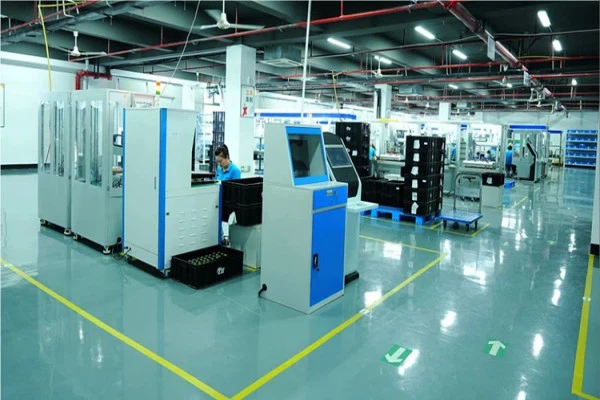
The company operates a 5,000-square-meter clean workshop equipped with automated machinery and precision testing instruments. Its manufacturing activities are supported by research and development, production, and quality inspection processes.
For overseas buyers, direct technical communication can be important when selecting drive models or developing customized equipment. Tonghang E-Drive provides pre-sales engineering consultation during the design stage, helping customers evaluate system requirements and product configurations. During order execution, the company can provide relevant drawings and performance information. Its after-sales team also responds to technical inquiries and assists with application-related questions.
Application Areas
- Textile machinery and automated material feeding equipment.
- CNC machinery and industrial processing equipment.
- Robotics and automated assembly systems.
- Packaging machinery and specialized industrial equipment.
Why Consider Tonghang E-Drive?
Tonghang E-Drive is worth evaluating for buyers who want to communicate directly with a Chinese manufacturer about product selection, technical parameters, and application-specific requirements. Its combination of servo drive and motor products, manufacturing facilities, and engineering support can be relevant to OEM customers and equipment builders seeking a supplier relationship beyond standard catalog purchasing.
To understand its development history, product range, manufacturing facilities, and service structure, visit the Tonghang E-Drive company profile.
For machinery projects requiring motor and drive matching, buyers can also review the available Industrial Automation Servo Motor Driver configurations and contact the engineering team for further technical discussion.
Suitable for machinery manufacturers, OEM customers, automation integrators, and industrial buyers who value direct manufacturer communication, application-specific product discussions, and technical support.
2. Mitsubishi Electric
Mitsubishi Electric is a globally established supplier of industrial automation and electrical equipment. Its factory automation portfolio includes programmable controllers, industrial robots, CNC systems, inverters, and AC servo products under the MELSERVO family.
The MELSERVO product range includes several generations and configurations, such as MELSERVO-J5, MELSERVO-JET, MELSERVO-J4, and MELSERVO-JE. Depending on the series, the portfolio covers servo amplifiers, rotary motors, linear motors, direct-drive motors, converters, and related accessories.
Product and Motion Control Features
Mitsubishi Electric's servo products are designed for machinery requiring controlled positioning, speed regulation, and coordinated motion. Different product generations offer different performance characteristics, communication options, and system integration functions.
For example, the MR-J4 family includes amplifier configurations supporting various communication interfaces and single-axis or multi-axis applications. Its broader servo ecosystem gives equipment manufacturers options when developing motion control systems around compatible Mitsubishi automation equipment.
Typical Application Areas
- CNC machine tools and precision processing equipment.
- Electronic component manufacturing and semiconductor equipment.
- Packaging, printing, and material handling machinery.
- Automated assembly and industrial positioning systems.
What Buyers Should Consider
Buyers should compare the relevant MELSERVO series according to motor compatibility, rated power, encoder specifications, control interfaces, and available communication protocols. When replacing an existing drive, checking the product generation and compatibility with the current controller is especially important.
Suitable purchasing profile: Manufacturers and integrators seeking an established industrial automation ecosystem with a broad range of compatible control products.
Official Website: Mitsubishi Electric AC Servo Products
3. Yaskawa Electric
Yaskawa Electric is a well-known Japanese manufacturer in motion control, robotics, and industrial automation. Its servo portfolio includes the Sigma-X, Sigma-7, and other product families, with corresponding servo packs, rotary motors, direct-drive motors, linear motors, and related motion components.
Servo Product Portfolio
Yaskawa's Sigma servo families provide different configurations for machine builders. Depending on the product series, users can evaluate single-axis, multi-axis, rotary, and linear motion solutions.
The Sigma-X and Sigma-7 product families are designed for a variety of machine automation requirements. Their available configurations cover different motor capacities and motion control applications, allowing engineers to select products according to the mechanical structure and operating conditions of their equipment.
Technical Characteristics and Applications
Yaskawa servo products are used in applications where accurate motion control and repeatable machine operation are important. These include robotic equipment, automated assembly, semiconductor-related machinery, packaging lines, and material handling systems.
- Servo motor and amplifier combinations for machine automation.
- Rotary, linear, and direct-drive motion configurations.
- Product options for single-axis and multi-axis equipment.
- Motion control components and engineering software tools.
What Buyers Should Consider
When selecting a Yaskawa system, buyers should identify the exact Sigma series, motor model, rated capacity, feedback type, and controller interface. Engineers should also check the required field network and available commissioning software to ensure the system fits the machine architecture.
Suitable purchasing profile: Equipment manufacturers and automation integrators working on precision machinery, robotics, and coordinated motion applications.
Official Website: Yaskawa Products and Solutions
4. Schneider Electric
Schneider Electric is an international company specializing in energy management and industrial automation. Its motion control portfolio includes the Lexium family, which covers servo drives, servo motors, integrated drives, and related automation products.
Lexium Servo Product Range
The Lexium portfolio provides different configurations for compact machinery and more advanced motion control applications. Product families such as Lexium 28, Lexium 32, Lexium 52, and Lexium 62 cover different power ranges and machine architecture requirements.
For example, Lexium 28 is designed for compact machines, while Lexium 62 provides multi-axis servo configurations for PacDrive-based automation systems. These product differences are important when selecting equipment for independent motion axes or synchronized machine operations.
Application Areas
Schneider Electric's motion products are relevant to packaging, food and beverage processing, material handling, electronics manufacturing, and other motion-intensive machine applications.
- Compact automated machinery and positioning equipment.
- Multi-axis motion control systems.
- Packaging and material processing lines.
- Industrial automation systems based on PacDrive architecture.
What Buyers Should Consider
Purchasers should identify whether their application requires a standalone servo drive, an integrated drive, or a coordinated multi-axis system. Compatibility with the controller, communication network, motor, and machine software should be confirmed before ordering.
Suitable purchasing profile: Machine builders and system integrators developing packaging equipment, synchronized machinery, and automation systems based on the Lexium ecosystem.
Official Website: Schneider Electric Servo Drives and Motors
5. ABB
ABB is a global technology company with extensive experience in electrification, automation, and motion technologies. Its servo product portfolio includes servo drives and motors designed for different industrial machine control requirements.
Servo Product Portfolio
ABB offers several servo product families, including MotiFlex e180, MicroFlex e190, E530 servo drives, and compatible servo motors. Different product models provide different voltage ranges, feedback interfaces, communication options, and overload characteristics.
For example, MotiFlex e180 supports flexible Ethernet communication options, while the E530 range includes pulse-train and EtherCAT variants. Such differences allow engineers to consider the product architecture according to the controller and communication requirements of the machine.
Industrial Applications
ABB servo products are relevant to packaging, textile, printing, food and beverage, electronics, and other machine automation applications. Their drive and motor combinations can be considered for systems requiring coordinated motion and controlled motor operation.
- Packaging and printing machinery.
- Textile and material processing equipment.
- Electronic and electrical manufacturing machinery.
- Automated production and machine handling systems.
What Buyers Should Consider
ABB product selection should be based on the exact model's voltage, power, current, motor feedback, and communication specifications. Buyers should also review the availability of product documentation, replacement components, and technical support in their target market.
Suitable purchasing profile: Industrial equipment manufacturers and system integrators seeking servo products within a broader international automation and motion control portfolio.
Official Website: ABB Servo Products
How to Select a Servo Drive for Industrial Automation
Choosing a servo drive requires an understanding of the machine's electrical specifications, mechanical load, operating cycle, and control architecture. A drive that works well in one application may not be appropriate for another, even if the rated power appears similar.
Before requesting quotations, buyers should prepare a technical specification sheet containing the following information.
1. Rated Power, Torque, and Speed
The rated power of the motor is an important selection parameter, but it should not be the only consideration. Engineers should calculate the torque required during acceleration, deceleration, continuous operation, and peak-load conditions.
The load inertia and transmission ratio also influence the motor's response. An unsuitable motor-drive combination may lead to overload alarms, poor dynamic performance, or unnecessary energy consumption.
For applications involving frequent starting and stopping, the peak torque requirement and operating duty cycle should receive particular attention.
2. Voltage and Electrical Compatibility
The drive's input voltage and current rating must match the available electrical supply and the selected motor. Buyers should verify whether the application requires single-phase or three-phase power and confirm the appropriate wiring and protection arrangements.
For international equipment projects, voltage standards and installation conditions may differ between destination markets. These factors should be confirmed before product selection.
3. Encoder and Feedback Compatibility
Encoder feedback is an important part of closed-loop motion control. Buyers should confirm the encoder type, resolution, signal interface, and compatibility between the motor and drive.
Incremental and absolute encoders have different feedback characteristics and application requirements. The appropriate option depends on the positioning process, homing method, machine controller, and operating environment.
4. Communication Protocols and Controller Matching
Modern automated machinery may use pulse and direction signals, RS485, Modbus, CANopen, EtherCAT, PROFINET, or other industrial communication technologies. The selected drive must support the interface required by the controller.
For multi-axis equipment, engineers should also review communication cycle requirements, synchronization functions, axis quantity, alarm handling, and parameter configuration methods.
5. Control Modes and Application Functions
Different applications may require position, speed, torque, or combined control modes. For example, CNC machinery often prioritizes positioning and speed response, while winding equipment may require more attention to torque and material tension.
Buyers should confirm whether the selected drive supports the required operating modes, electronic gearing, homing, braking functions, and other application-specific features.
6. Installation Environment and Protection
Temperature, humidity, dust, vibration, electrical interference, and cabinet ventilation all influence the installation of servo equipment. The drive's operating conditions should be compared with the actual factory environment.
Engineers should also consider grounding, cable routing, cooling, cabinet space, and accessibility for routine inspection. Good installation practices help reduce avoidable electrical and operational problems.
7. Supplier Engineering and After-Sales Support
Product selection does not end when the quotation is issued. Technical documentation, parameter guidance, commissioning support, troubleshooting, and spare parts availability all contribute to the long-term operation of the machine.
When comparing an Industrial Automation Servo Motor Driver, buyers should ask the supplier to confirm the matching motor model, supported communication interface, control functions, and applicable installation conditions.
Industrial Applications of Servo Drive Technology
Servo drives are used in different industries because they provide controlled motor movement for equipment that requires repeatability, dynamic response, or coordinated positioning. The required specifications vary according to the production process and machine design.
CNC Machine Tools
CNC machine tools use servo motors to control feed axes, rotary tables, and other moving components. Accurate positioning and consistent speed response are important for machining quality and production repeatability.
Servo selection should consider axis load, acceleration, mechanical transmission, encoder feedback, and the motion controller's communication requirements.
Robotics and Automated Assembly
Industrial robots and automated assembly equipment depend on coordinated movements across multiple axes. Servo drives regulate motor operation according to the motion commands generated by the robot controller or machine control system.
Applications may include material handling, component insertion, positioning, fastening, and automated transfer. The appropriate drive configuration depends on axis dynamics, motor capacity, controller compatibility, and safety requirements.
Packaging and Printing Machinery
Packaging machines may combine feeding, cutting, sealing, labeling, and conveying operations. These processes often require coordinated motion and adjustable operating speeds to accommodate different package sizes and production conditions.
Printing equipment also uses controlled motion to maintain synchronization between feeding, printing, and material handling sections. Servo control helps machinery designers implement repeatable motion profiles and flexible operating sequences.
Textile and Material Processing Equipment
Textile machinery includes winding, feeding, embroidery, cutting, and other processes that require controlled motor operation. Different stages may require position control, speed regulation, or torque management according to the production process.
In winding applications, for example, engineers need to consider changes in roll diameter, material tension, and mechanical load when selecting the motor and drive configuration.
Industrial Doors and Specialized Machinery
Industrial high-speed doors and specialized processing equipment may use dedicated servo control systems to manage opening and closing movement, acceleration, deceleration, and position detection.
These applications often have different mechanical and operating requirements from general-purpose machine tools. A specialized drive configuration may therefore be more suitable than a standard product when the application requires specific control functions.
Quality and Reliability Assurance
Product quality is an important factor when purchasing servo drives for industrial automation. Since drives operate as part of an electrical and mechanical control system, their reliability can influence machine availability, production consistency, and maintenance requirements.
Component Selection and Manufacturing Control
Manufacturing quality begins with the selection of electronic components, power devices, connectors, circuit boards, and other materials. Consistent assembly procedures and appropriate inspection arrangements help manufacturers control product variation across production batches.
Buyers should ask suppliers about their manufacturing process, component traceability, incoming inspection, assembly procedures, and finished-product testing. These details provide a more practical basis for evaluating quality than general claims about product reliability.
Electrical and Functional Testing
Servo drives should undergo appropriate electrical and functional checks before shipment. Depending on the product design, these may include power-on inspection, parameter verification, communication checks, protection-function tests, and operation tests with compatible motors.
For applications with special operating requirements, customers may also request additional inspection records or project-specific verification before delivery.
Environmental and Operational Considerations
Industrial equipment may operate in environments with temperature fluctuations, dust, vibration, and electrical interference. Proper enclosure selection, cabinet ventilation, grounding, and cable installation are important for maintaining stable operation.
It is also necessary to distinguish between the operating conditions of the drive and those of the motor. The protection rating, temperature limits, and installation requirements of each component should be checked separately.
Documentation and Product Traceability
Technical documentation supports installation, commissioning, maintenance, and future equipment replacement. Buyers should obtain the appropriate product manuals, wiring diagrams, parameter lists, communication descriptions, and model identification information.
For equipment manufacturers, maintaining these documents together with machine drawings and commissioning records can simplify future maintenance and reduce troubleshooting time.
Future Development Trends in Industrial Servo Technology
Industrial automation is evolving as manufacturers seek more flexible production systems, connected equipment, and improved operational efficiency. These developments are influencing how servo drives are designed, integrated, and maintained.
1. Greater Integration with Industrial Networks
Industrial communication networks are becoming increasingly important for connecting controllers, servo drives, sensors, and monitoring platforms. More flexible communication architectures can help manufacturers coordinate multiple machine axes and access operating information more efficiently.
As a result, communication compatibility is becoming a key consideration during equipment design and supplier evaluation.
2. Compact Design and Higher Power Density
Machine builders often need to reduce cabinet space and simplify equipment installation. Improvements in power electronics, component integration, and thermal management are supporting the development of more compact drive products.
However, compact size must be considered together with cooling requirements, electrical capacity, and the actual operating environment.
3. Intelligent Monitoring and Predictive Maintenance
Modern automation systems increasingly use operating data to monitor equipment conditions. Servo drive information, including alarms, load conditions, temperature, and operating status, can provide useful references for maintenance teams.
When combined with appropriate software and data analysis, these functions may support condition monitoring and more structured maintenance planning.
4. Energy Efficiency and Regenerative Technologies
Energy consumption is an important concern for factories operating large numbers of motors and automated machines. Efficient drive control, suitable motor sizing, and optimized motion profiles can help reduce unnecessary energy use.
In applications involving frequent deceleration or high-inertia loads, regenerative solutions may also be considered where the system design and economic conditions justify their use.
5. More Application-Specific Motion Control
Different industrial machines have different control requirements. Standard drive products may meet many general applications, while specialized equipment may require particular software functions, communication interfaces, or electrical configurations.
This is encouraging manufacturers to develop more application-oriented drive products and provide technical consultation earlier in the equipment design process.
Why Choose Tonghang E-Drive for Industrial Automation Applications?
When evaluating a servo supplier, buyers should look beyond product specifications and consider the manufacturer's ability to support the complete purchasing and application process. This includes technical communication, product matching, manufacturing, documentation, and after-sales service.
Integrated R&D, Production, and Sales
Tonghang E-Drive integrates research and development, manufacturing, sales, and after-sales service. Since its establishment in 2017, the company has developed multiple servo drive and motor series for industrial automation applications.
This integrated structure enables customers to communicate with the manufacturer about product specifications, application requirements, and possible configuration adjustments.
Manufacturing Facilities and Production Environment
The company operates a 5,000-square-meter clean workshop equipped with automated production machinery and precision testing instruments. These facilities support its manufacturing activities and product inspection processes.
For industrial procurement teams, it is useful to review the production environment together with the supplier's quality inspection procedures, manufacturing arrangements, and documentation capabilities.
Technical Consultation Before Ordering
Different equipment projects may require different motor power ratings, control modes, encoder configurations, and communication interfaces. Tonghang E-Drive's engineering team can provide consultation during the design phase to help customers evaluate product selection and system requirements.
Buyers can provide motor nameplates, electrical diagrams, controller information, mechanical drawings, and application descriptions to make technical discussions more specific and efficient.
Customized Product Discussions
For applications involving particular operating conditions or non-standard requirements, customers can discuss possible product adjustments with the manufacturer. The feasibility of customization depends on the selected product platform, electrical specifications, software functions, communication requirements, and project quantity.
Technical requirements should be reviewed and confirmed before order placement to establish a clear scope for development, production, and delivery.
Support Throughout the Purchasing Process
Tonghang E-Drive provides support at different stages of customer cooperation:
- Pre-sales: Engineering consultation during product selection and equipment design.
- In-sales: Relevant drawings and performance information, with technical communication based on project requirements.
- After-sales: Responses to product application questions and technical support for customer projects.
For manufacturers developing new equipment or upgrading existing automation lines, this communication can help clarify technical details before purchasing and during implementation.
To learn more about the company's background, development milestones, production facilities, and service capabilities, visit About Tonghang E-Drive.
FAQ About Industrial Servo Drives
A frequency inverter primarily controls motor speed by adjusting the supplied electrical frequency and voltage. A servo drive is designed for closed-loop motion control and typically works with a compatible servo motor and feedback device. It can regulate position, speed, and torque according to the application requirements. The appropriate choice depends on the machine's required accuracy, response, and operating functions.
Start by calculating the motor's required torque and speed under the actual operating conditions. Consider continuous load, peak torque, acceleration, deceleration, inertia, transmission ratio, and duty cycle. Then check that the drive's rated voltage and current are compatible with the selected motor. For complex applications, provide the supplier with mechanical drawings and operating parameters for engineering evaluation.
Common communication methods include pulse and direction signals, RS485, Modbus, CANopen, EtherCAT, and PROFINET. The supported options vary by manufacturer and product series. Buyers should confirm the exact drive model's interface and compatibility with the PLC or motion controller before ordering.
A standard servo drive generally controls its corresponding motor, while multi-axis coordination is normally managed through a suitable motion controller or networked control architecture. Some specialized products support multiple-axis configurations. The actual number of axes depends on the drive design, controller capacity, communication system, and software configuration.
Replacement may be possible, but it requires a compatibility assessment. Engineers should check the motor electrical ratings, encoder interface, communication protocol, control signals, wiring, mounting dimensions, and parameter settings. Cross-brand replacement should not be assumed to be plug-and-play. Technical confirmation is recommended before purchasing.
Useful information includes motor power, rated voltage, current, speed, torque, encoder type, controller brand and model, communication protocol, application description, operating environment, and purchasing quantity. Motor nameplate photographs, electrical diagrams, and machine drawings can further improve the accuracy of product recommendations.
Servo systems may require parameter configuration, motor matching, communication setup, and commissioning during installation. Responsive technical support helps customers clarify product functions, understand operating alarms, and address application-related questions. It is especially valuable for customized machinery and long-term production equipment.
Some manufacturers can evaluate customized requirements involving electrical parameters, communication interfaces, control functions, and application-specific features. The available customization depends on the product platform and engineering feasibility. Customers should provide detailed technical requirements so that the manufacturer can assess the project before confirming an order.
Conclusion: Advancing Industrial Automation with Reliable Servo Drives
Servo drives are important components in modern industrial automation because they regulate motor position, speed, and torque according to machine operating requirements. Their performance influences production repeatability, motion coordination, equipment flexibility, and maintenance planning.
Mitsubishi Electric, Yaskawa Electric, Schneider Electric, and ABB offer established servo and motion control portfolios for a wide range of industrial applications. Zhejiang Tonghang E-Drive Technology Co., Ltd. provides another option for buyers seeking a Chinese manufacturer with servo product development, production facilities, and direct technical communication.
When selecting a supplier, procurement teams should evaluate more than brand recognition. Motor-drive compatibility, electrical ratings, communication interfaces, control functions, manufacturing capability, technical documentation, and after-sales support all deserve attention.
A carefully selected Industrial Automation Servo Motor Driver should match the actual requirements of the equipment and its operating environment. Clear technical communication before ordering can help manufacturers reduce integration risks and establish a more reliable automation system.
Looking for a Servo Drive Manufacturer for Your Automation Project?
Zhejiang Tonghang E-Drive Technology Co., Ltd. welcomes inquiries from machinery manufacturers, automation integrators, distributors, and industrial equipment buyers. Share your motor specifications, control requirements, application details, and purchasing quantity with our team. We can review your technical requirements, provide relevant product information, and discuss suitable configurations for your project.
Contact Our Engineering Team →