

Hey there! As a supplier of brushless servo amplifiers, I've seen firsthand how crucial it is for these devices to be adaptable to different environments. In this blog, I'll break down the environmental adaptability requirements for a brushless servo amplifier and why they matter.
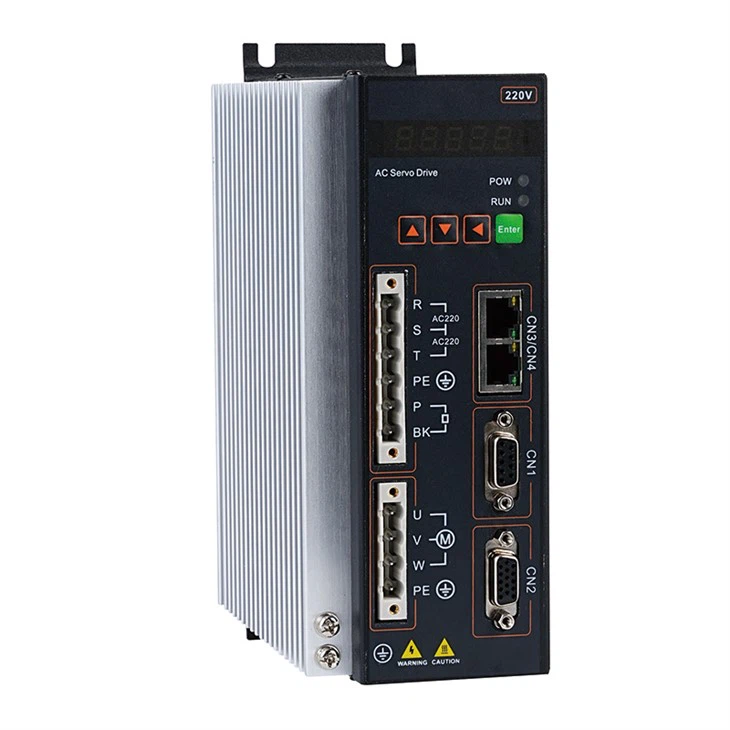

Temperature and Humidity
Let's start with temperature. Brushless servo amplifiers generate heat during operation, and they need to work well across a wide temperature range. Extreme cold can make the electronic components brittle and affect their performance. On the other hand, high temperatures can cause overheating, which might lead to component failure or reduced lifespan.
Most brushless servo amplifiers are designed to operate within a temperature range of -20°C to 60°C. But if you're using them in an industrial setting where there are large temperature fluctuations, you might need an amplifier with a wider operating range. For instance, in a steel mill where temperatures can soar, a servo amplifier that can handle high heat is a must.
Humidity is another factor. High humidity can lead to corrosion of the amplifier's components. Moisture can seep into the circuit boards and cause short - circuits or other electrical problems. A good brushless servo amplifier should be able to withstand relative humidity levels of up to 90% without condensation. Some amplifiers even come with special coatings or enclosures to protect against moisture.
Dust and Debris
In many industrial environments, dust and debris are everywhere. Whether it's a woodworking shop with sawdust or a mining site with fine particles, these contaminants can get into the brushless servo amplifier and cause issues.
Dust can clog the ventilation openings of the amplifier, preventing proper heat dissipation. This can lead to overheating and reduced performance. Debris can also damage the internal components, such as the circuit boards and connectors.
To deal with this, brushless servo amplifiers often come with different levels of protection against dust and debris. The Ingress Protection (IP) rating system is used to indicate how well a device is protected. For example, an IP54 - rated amplifier is protected against dust ingress to a large extent and is also protected against splashing water from any direction. If you're in a very dusty environment, you might want to consider an amplifier with a higher IP rating, like IP65 or IP67, which offer even better protection against dust and water.
Vibration and Shock
Industrial machinery often produces a lot of vibration and shock. Brushless servo amplifiers need to be able to withstand these forces without getting damaged. Vibration can loosen the internal connections of the amplifier, leading to intermittent electrical problems or complete failure. Shock, such as from a sudden impact, can also cause physical damage to the components.
Manufacturers test their brushless servo amplifiers to ensure they can handle a certain level of vibration and shock. For example, they might subject the amplifiers to vibrations with a frequency range of 10 - 2000 Hz and a certain acceleration level. Some amplifiers are designed with shock - absorbing materials or mounting systems to reduce the impact of vibration and shock.
Electrical Noise
In an industrial setting, there's a lot of electrical noise. This can come from other electrical equipment, such as motors, generators, and power supplies. Electrical noise can interfere with the operation of the brushless servo amplifier, causing erratic behavior or incorrect control signals.
To combat electrical noise, brushless servo amplifiers are equipped with various noise - filtering techniques. They might have built - in electromagnetic interference (EMI) filters to block out unwanted electrical signals. Shielded cables are also used to reduce the pickup of electrical noise.
Altitude
Altitude can also affect the performance of brushless servo amplifiers. At higher altitudes, the air is thinner, which means there's less air to dissipate heat. This can cause the amplifier to overheat more easily.
Most amplifiers are designed to operate at altitudes up to 2000 meters. If you're using the amplifier at a higher altitude, you might need to derate its power output to prevent overheating. Some manufacturers offer amplifiers that are specifically designed for high - altitude applications.
Compatibility with Different Systems
Brushless servo amplifiers need to be compatible with different control systems and communication protocols. For example, they might need to work with a Programmable Logic Controller (PLC) or a motion control system.
There are different types of servo drives available, each with its own features. For a Servo Drive With Dynamic Response, it offers quick and accurate response to control signals, which is great for applications that require high - speed and precise motion control. The Ethercat Motor Driver is known for its high - speed communication capabilities, allowing for real - time control of the servo motor. And the Analog Input Servo Drive is suitable for applications where an analog control signal is used.
Why Environmental Adaptability Matters
You might be wondering why all these environmental adaptability requirements are so important. Well, if a brushless servo amplifier can't handle the environment it's in, it's going to break down frequently. This means costly downtime for your operations, as you'll have to stop production to repair or replace the amplifier.
It can also lead to safety issues. For example, if an amplifier fails due to overheating in a critical application, it could cause the machinery to malfunction, putting workers at risk.
By choosing a brushless servo amplifier with good environmental adaptability, you can ensure reliable operation, reduce maintenance costs, and increase the lifespan of your equipment.
Conclusion
As a supplier of brushless servo amplifiers, I know that environmental adaptability is a key factor in choosing the right amplifier for your application. Whether it's dealing with temperature, humidity, dust, vibration, electrical noise, or altitude, there are specific requirements that need to be met.
If you're in the market for a brushless servo amplifier and want to discuss your specific environmental needs, feel free to reach out. We can help you find the perfect amplifier that will work well in your environment and meet your performance requirements. Let's have a chat and see how we can make your operations more efficient and reliable.
References
- "Industrial Servo Drives: Principles and Applications" by some industry expert
- Manufacturer's technical documentation on brushless servo amplifiers