

As a supplier of low voltage servo drives, I often get asked about the response time of these devices. It's a crucial factor that can significantly impact the performance of automation systems, so I'm more than happy to dive into this topic.
What is Response Time?
Let's start by clarifying what we mean by response time in the context of a low voltage servo drive. Simply put, response time refers to how quickly a servo drive can react to a change in the input signal and adjust the motor's speed, torque, or position accordingly. It's measured in milliseconds (ms), and a shorter response time generally means better performance.
Imagine you're working on a high - speed assembly line. The servo drive needs to be able to make rapid adjustments to keep the production process running smoothly. If the response time is too long, the motor might not be able to keep up with the required changes, leading to errors, delays, and potentially lower product quality.
Factors Affecting Response Time
There are several factors that can influence the response time of a low voltage servo drive.
1. Control Algorithm
The control algorithm is the brain of the servo drive. It processes the input signals and calculates the appropriate output to control the motor. Modern servo drives use advanced control algorithms, such as proportional - integral - derivative (PID) control or more sophisticated model - based control strategies. These algorithms can significantly reduce the response time by quickly analyzing the error between the desired and actual values and making precise adjustments.
For example, a well - tuned PID controller can rapidly correct any deviations in the motor's speed or position, ensuring a fast and accurate response.
2. Power Electronics
The power electronics in the servo drive, including the inverter and the power transistors, play a crucial role in determining the response time. High - quality power electronics can switch on and off more quickly, allowing for faster changes in the motor's current and voltage. This, in turn, enables the motor to respond more rapidly to the control signals.
If the power electronics are of poor quality, they might introduce delays in the signal transmission, resulting in a longer response time.
3. Feedback System
The feedback system provides information about the motor's actual speed, torque, or position. It typically consists of sensors such as encoders or resolvers. A high - resolution and fast - responding feedback system can provide accurate and up - to - date information to the control algorithm. This allows the control algorithm to make more precise adjustments and reduces the time it takes for the motor to reach the desired state.
For instance, an encoder with a high pulse count per revolution can provide more detailed information about the motor's position, enabling the servo drive to make finer adjustments and improve the response time.
Importance of Short Response Time
A short response time is essential in many applications.
1. High - Speed Motion Control
In applications such as robotics and CNC machining, high - speed motion control is required. The servo drive needs to be able to quickly adjust the motor's speed and position to follow complex motion paths accurately. A short response time ensures that the robot or the machine tool can move smoothly and precisely, resulting in higher productivity and better - quality products.

2. Precision Positioning
In industries like semiconductor manufacturing and electronics assembly, precision positioning is critical. The servo drive must be able to position the motor with high accuracy. A short response time allows the drive to correct any position errors quickly, ensuring that the components are placed exactly where they need to be.
3. Dynamic Load Handling
Some applications involve dynamic loads, where the load on the motor changes rapidly. For example, in a packaging machine, the load can vary depending on the size and weight of the packages being processed. A servo drive with a short response time can quickly adapt to these changes in load and maintain the motor's performance, preventing stalling or overloading.
Our Low Voltage Servo Drives and Response Time
At our company, we understand the importance of a short response time in servo drives. That's why we've designed our low voltage servo drives with state - of - the - art technology to ensure optimal performance.
Our servo drives feature advanced control algorithms that are continuously optimized to provide fast and accurate responses. The power electronics are carefully selected for their high - speed switching capabilities, minimizing the time it takes to change the motor's current and voltage. And our feedback systems use high - resolution sensors to provide real - time information about the motor's state.
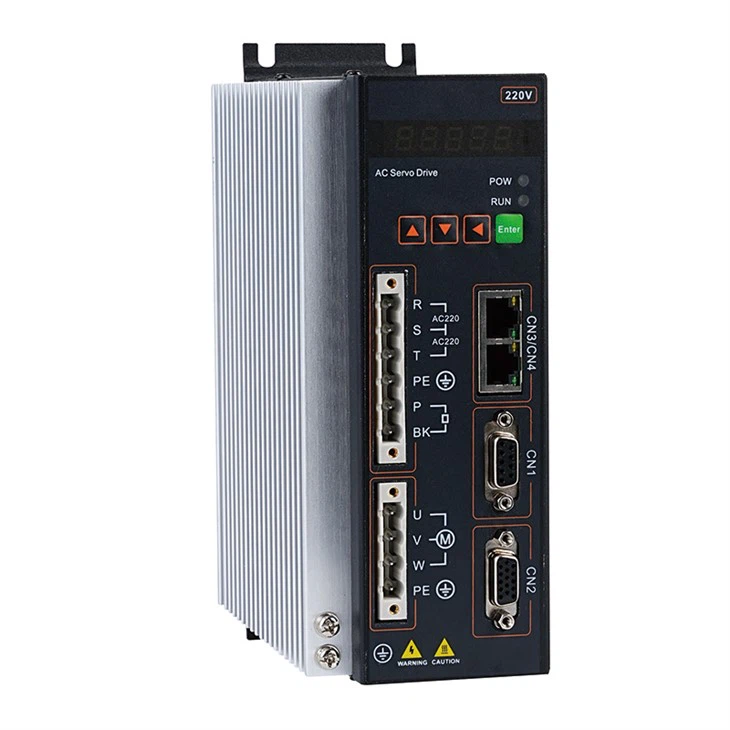
We offer a wide range of low voltage servo drives suitable for various applications. Whether you're looking for a Servo Drive For Automation, an AC Servo Drives, or an Ethercat Motor Driver, we have the right solution for you.
Contact Us for Your Low Voltage Servo Drive Needs
If you're in the market for a low voltage servo drive with a short response time, don't hesitate to reach out to us. Our team of experts is ready to help you select the best product for your specific application. We can also provide technical support and assistance with installation and commissioning.
Investing in a high - quality low voltage servo drive with a short response time can significantly improve the performance of your automation system. So, take the next step and contact us today to start the procurement process.
References
- "Servo Motors and Drives Handbook" by Peter Nachtwey
- "Control Systems Engineering" by Norman S. Nise