

As a leading supplier of servo control drives, I've witnessed firsthand the critical role these devices play in various industrial applications. Servo control drives are the heart of many automated systems, ensuring precise motion control and reliable operation. One of the key aspects that make servo control drives so indispensable is their extensive range of protection functions. In this blog, I'll delve into the various protection functions that a servo control drive offers, highlighting their importance in safeguarding equipment and ensuring smooth operations.
Overcurrent Protection
Overcurrent is a common issue in electrical systems, and servo control drives are no exception. When the current exceeds the rated value, it can cause overheating, damage to the drive components, and even lead to a complete system failure. Overcurrent protection in servo control drives is designed to detect and respond to excessive current conditions promptly.
Most servo control drives use current sensors to monitor the current flowing through the drive. If the current exceeds a predefined threshold, the drive will take immediate action to protect itself. This can include reducing the output power, shutting down the drive, or triggering an alarm. By quickly responding to overcurrent conditions, the drive can prevent damage to itself and other connected components.
For example, in a Servo Drive For Milling Machines, overcurrent protection is crucial. During the milling process, sudden changes in the cutting load can cause a spike in the current. If the drive does not have proper overcurrent protection, it could be damaged, leading to costly downtime and repairs.
Overvoltage and Undervoltage Protection
Voltage fluctuations are another common problem in industrial environments. Overvoltage can cause insulation breakdown, component damage, and even fire, while undervoltage can lead to unstable operation and reduced performance. Servo control drives are equipped with overvoltage and undervoltage protection mechanisms to ensure their safe and reliable operation.
Overvoltage protection monitors the input voltage and takes action if it exceeds a certain limit. This can involve diverting the excess voltage to a protection circuit or shutting down the drive to prevent damage. Undervoltage protection, on the other hand, detects when the input voltage drops below a predefined level. In such cases, the drive may reduce its output power or shut down to avoid operating under unfavorable conditions.
In applications where the power supply is unstable, such as in remote locations or areas with high electrical interference, overvoltage and undervoltage protection are essential. An Ethercat Motor Driver used in a factory with a fluctuating power grid relies on these protection functions to maintain stable operation.
Overheating Protection
Heat is the enemy of electronic components, and servo control drives are particularly susceptible to overheating. Continuous operation at high loads, poor ventilation, or environmental factors can cause the drive to overheat, leading to reduced performance, component failure, and shortened lifespan.
To prevent overheating, servo control drives are equipped with temperature sensors that monitor the internal temperature. If the temperature exceeds a safe limit, the drive will take steps to cool down. This can include reducing the output power, increasing the fan speed, or shutting down the drive until it cools down.
For instance, in a high-speed servo system, the drive generates a significant amount of heat due to the high power requirements. Without proper overheating protection, the drive could overheat quickly, causing damage to the internal components. An AC Servo Amplifier with efficient overheating protection can ensure reliable operation even in demanding applications.
Short Circuit Protection
Short circuits can occur due to wiring faults, component failures, or external factors. When a short circuit happens, a large amount of current can flow through the drive, causing severe damage. Short circuit protection in servo control drives is designed to detect and isolate the short circuit quickly.
Most drives use fast-acting fuses or circuit breakers to protect against short circuits. When a short circuit is detected, the fuse blows or the circuit breaker trips, cutting off the power supply to the drive. This prevents the drive from being damaged by the excessive current.
In a complex industrial automation system, short circuit protection is crucial to prevent damage to multiple components. A servo control drive with reliable short circuit protection can minimize the impact of a short circuit and reduce the downtime for repairs.
Phase Loss Protection
Phase loss can occur in three-phase power systems due to a blown fuse, a loose connection, or a fault in the power supply. When a phase is lost, the motor can experience uneven torque, overheating, and reduced performance. Phase loss protection in servo control drives detects the loss of a phase and takes appropriate action.
The drive can shut down the motor to prevent damage or adjust the output to compensate for the phase loss. This ensures that the motor operates safely and efficiently even in the event of a phase loss.
In industrial applications where three-phase motors are commonly used, such as in conveyor systems and pumps, phase loss protection is essential. A servo control drive with reliable phase loss protection can prevent costly damage to the motor and other connected equipment.
Overload Protection
Overload occurs when the motor is required to operate at a higher load than its rated capacity. This can happen due to a mechanical jam, a sudden increase in the load, or improper sizing of the motor. Overload protection in servo control drives monitors the motor's load and takes action if it exceeds a certain limit.
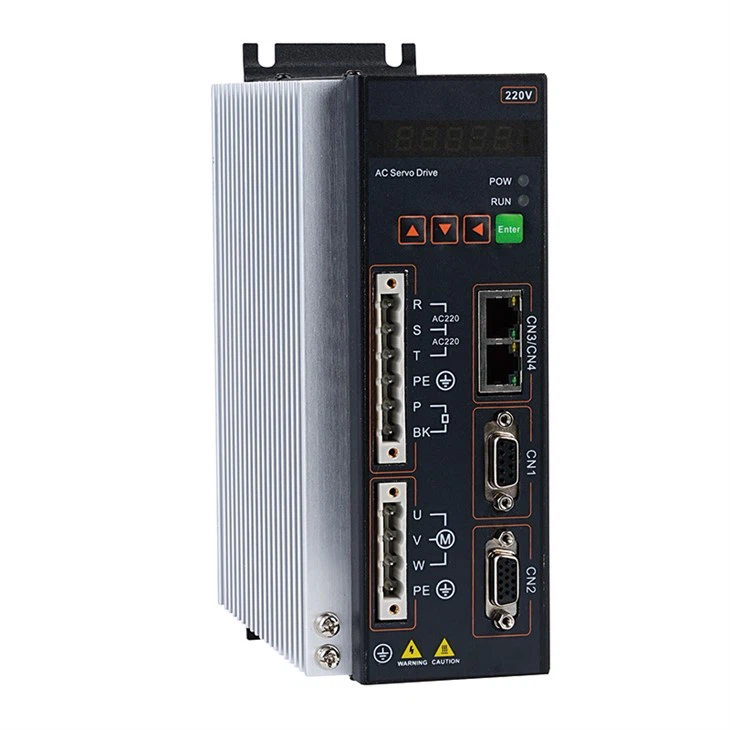

The drive can reduce the output power, shut down the motor, or trigger an alarm to alert the operator. By protecting the motor from overload, the drive can extend the motor's lifespan and prevent costly repairs.
In a manufacturing plant, where motors are used to drive various machines, overload protection is crucial. A servo control drive with effective overload protection can ensure the smooth operation of the production line and prevent unexpected downtime.
Conclusion
The protection functions of a servo control drive are essential for ensuring the safe, reliable, and efficient operation of industrial automation systems. Overcurrent protection, overvoltage and undervoltage protection, overheating protection, short circuit protection, phase loss protection, and overload protection all work together to safeguard the drive and the connected equipment.
As a supplier of servo control drives, we understand the importance of these protection functions. Our drives are designed with the latest technology and high-quality components to provide reliable protection in various industrial applications. Whether you are looking for a Servo Drive For Milling Machines, an Ethercat Motor Driver, or an AC Servo Amplifier, we have the right solution for you.
If you are interested in learning more about our servo control drives or would like to discuss your specific application requirements, please feel free to contact us. We are committed to providing you with the best products and services to meet your needs.
References
- "Industrial Servo Drives: Principles and Applications" by William J. Palm III
- "Motion Control Handbook" by Peter Nachtwey