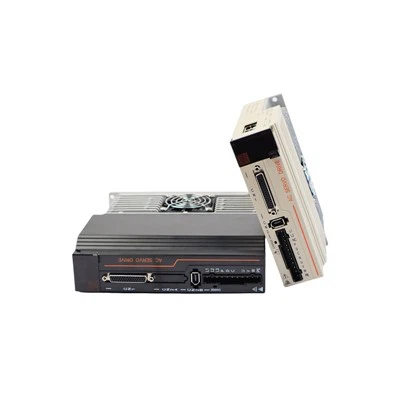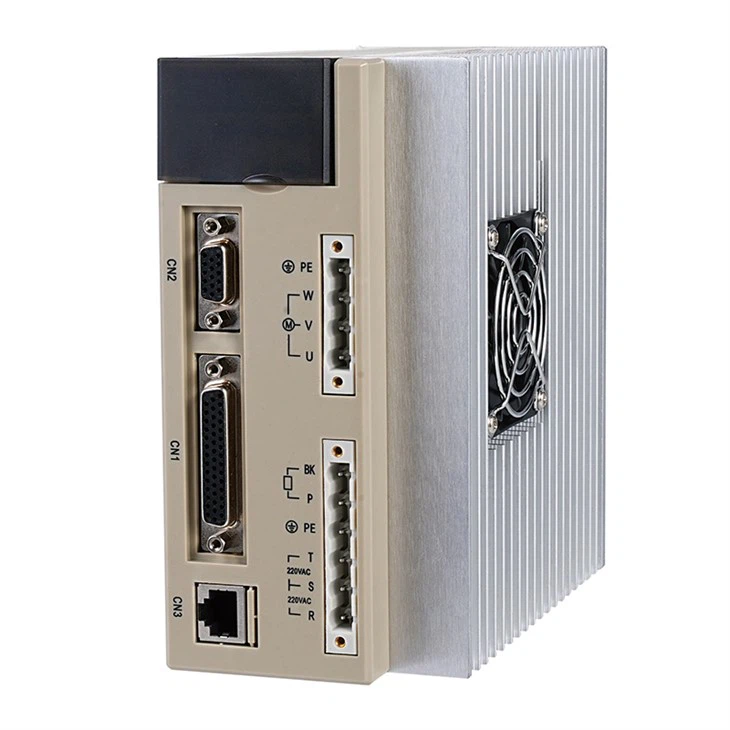
Zhejiang Tonghang E-Drive Technology Co., Ltd. is one of the most reliable manufacturers and suppliers of servo drive for textile machines in China. The company has world-leading production equipment and strong manufacturing capabilities. Please rest assured to buy the best servo drive for textile machines from our factory.
Servo Drive For Textile Machines
High-precision servo drive designed for textile machinery, delivering stable tension control, high-speed synchronization, accurate positioning, and reliable continuous operation.
Designed for textile equipment manufacturers and automation integrators, this servo drive supports different motion control requirements throughout yarn processing, weaving, knitting, spinning, and winding operations. With multiple control modes, encoder feedback, and industrial communication options, it helps manufacturers configure motion systems according to machine structure and production requirements.
The Servo Drive For Textile Machines combines flexible power configurations with position, speed, and torque control. It can be considered for equipment requiring coordinated motor operation, adjustable speed, and consistent material handling during continuous production.
| Feature | Specification |
|---|---|
| Input Voltage | 220V / 380V AC |
| Power Range | 0.2 kW – 15 kW |
| Control Mode | Position / Speed / Torque |
| Communication | Modbus, CANopen, EtherCAT |
| Feedback | Encoder, Resolver, Absolute Encoder |
| Protection | Overvoltage, Overcurrent, Overheat, Short Circuit |

Common Problems in Textile Machines
Textile production involves continuous material transportation, repeated mechanical movements, and coordinated operations between multiple machine components. Changes in motor speed, yarn tension, or positioning can affect fabric consistency and production efficiency. Identifying these challenges is an important step when selecting an appropriate motion control system.
Fabric Inconsistency
Unstable motor speed and inconsistent material feeding can lead to variations in fabric density and processing quality.
Yarn Breakage
Improper tension adjustment may cause excessive pulling force, increasing the possibility of yarn breakage and production interruptions.
Pattern Errors
Inaccurate positioning and insufficient synchronization between machine axes can affect knitting patterns and fabric processing consistency.
Frequent Downtime
Electrical interference, unsuitable drive configurations, and insufficient maintenance can affect system stability and equipment availability.
These operating challenges are closely related to motor selection, feedback accuracy, control parameter settings, and mechanical transmission conditions. A properly configured servo system can help equipment manufacturers improve motion coordination and address specific production requirements.

How Our Servo Drive Solves These Problems
Servo motion control helps address common textile machinery challenges through coordinated speed regulation, torque management, position feedback, and communication with external control devices. The appropriate configuration depends on the machine's mechanical structure, motor specifications, and production process.
Stable Speed Regulation
Helps maintain consistent motor speed and material feeding during textile processing, supporting more uniform fabric production.
Torque Management
Provides adjustable torque control for applications involving yarn tension, winding, and material transportation.
Multiple Control Modes
Position, speed, and torque modes provide flexibility for different textile machine functions and production stages.
Responsive Motion Control
Supports timely responses to control commands and helps coordinate machine movements during changing operating conditions.
Communication Compatibility
Modbus, CANopen, and EtherCAT options support integration with compatible industrial controllers and automation systems.
Integrated Protection
Overcurrent, overvoltage, overheating, and short-circuit protection functions help protect the drive during operation.
For textile equipment with multiple motors, engineers should also consider the coordination between individual drive units, feedback devices, and the main machine controller. Proper parameter configuration and wiring verification are important for achieving the intended motion behavior.
Motion Control Requirements in Textile Production
Different textile processes place different demands on motor control. Yarn feeding, fabric formation, material winding, and mechanical positioning may require different combinations of speed, torque, and position regulation. The Servo Drive For Textile Machines can be evaluated according to these specific operating requirements.
Yarn Feeding and Tension
Yarn feeding systems need coordinated motor operation to help maintain appropriate material tension and reduce irregular feeding during continuous production.
Fabric Formation
Weaving and knitting equipment rely on accurate mechanical movements and synchronization between operating components to maintain consistent processing conditions.
Winding and Unwinding
Torque and speed adjustment can help coordinate material winding and unwinding as roll diameter and mechanical load conditions change.
Machine Positioning
Position control and encoder feedback support applications requiring repeatable movement and accurate mechanical positioning.
When selecting a control strategy, manufacturers should identify the actual function of each motor rather than applying the same parameters to every machine axis. This helps achieve better coordination between the drive, motor, and mechanical components.
Textile Machine Selection Guide
Choosing the right servo drive for textile machines is critical to ensuring stable production, fabric quality, and system reliability. The selection process should consider the machine type, motor load, speed requirements, feedback configuration, and control architecture. The following table provides a practical reference for preliminary product selection.
| Machine Type | Key Requirement | Recommended Feature |
|---|---|---|
| Weaving Machine | High-speed synchronization | Responsive speed control and coordinated motion |
| Knitting Machine | Precision positioning | Position control and compatible encoder feedback |
| Spinning Machine | Stable yarn tension | Adjustable torque and speed control |
| Dyeing Machine | Continuous operation | Appropriate drive sizing and protection functions |
| Winding System | Tension and speed control | Torque and speed control modes |
The recommended features in this table are general selection references rather than fixed model assignments. Final selection should be confirmed according to motor power, rated current, operating speed, load characteristics, feedback type, and required communication interface.
Important Parameters to Confirm Before Ordering
Before purchasing, textile equipment manufacturers should prepare the motor nameplate information, rated power, rated voltage, rated speed, torque requirements, encoder specifications, and machine wiring requirements. For multi-axis applications, it is also useful to provide the number of motors and the required synchronization method.
Textile Machine Applications
Servo technology can be used in different textile manufacturing processes where adjustable motor speed, accurate positioning, and controlled torque are required. Application suitability depends on the mechanical design and electrical configuration of the equipment.
| Machine | Application Benefit |
|---|---|
| Weaving Machine | Supports coordinated movement and consistent fabric processing conditions. |
| Knitting Machine | Supports positioning control and repeatable mechanical movement. |
| Spinning Machine | Helps regulate yarn feeding and motor torque according to operating requirements. |
| Winding Machine | Supports adjustable speed and torque for material winding processes. |
| Textile Finishing Equipment | Provides adjustable motion control for material transportation and processing. |
Servo Drive Integration and Commissioning
Correct installation and commissioning are essential for achieving stable motion control in textile machinery. The drive, motor, encoder, and machine controller should be configured according to their electrical and mechanical specifications.
01. Motor Matching
Check motor rated power, voltage, current, speed, and feedback specifications to confirm compatibility with the selected servo drive.
02. Wiring Verification
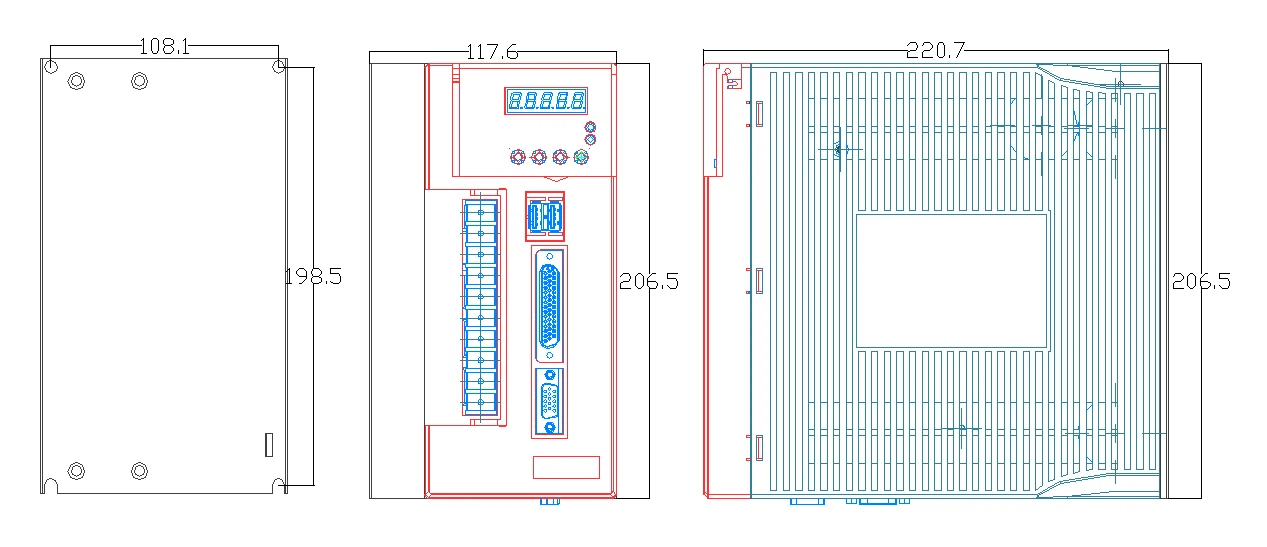
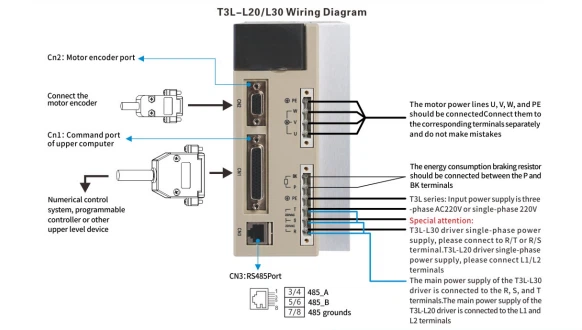
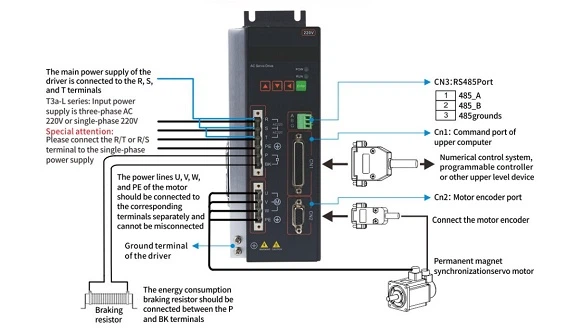
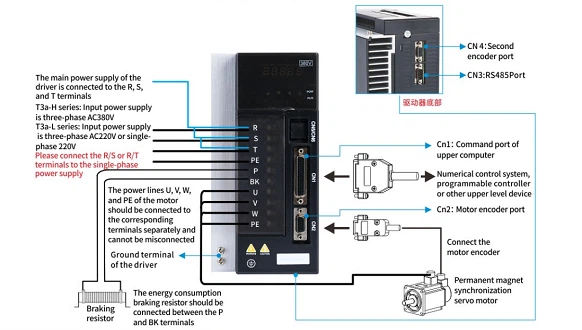
Confirm power connections, motor wiring, encoder signals, grounding, and communication connections according to the corresponding wiring documentation.
03. Parameter Configuration
Configure the control mode, motor parameters, speed limits, torque settings, and relevant protection functions according to the machine requirements.
04. Operation Testing
Check motor direction, feedback signals, speed response, positioning behavior, and coordination with the machine controller before regular production.
For machines involving multiple servo axes, the synchronization method and communication configuration should also be verified during commissioning. Proper parameter adjustment and testing help identify compatibility issues before the equipment enters regular operation.
Application Case: Weaving Machine Upgrade Project
Customer Location: India
Machine Type: High-speed weaving machine
Production Issue: Frequent yarn breakage, unstable fabric density, and a high defect rate during high-speed operation.
Root Cause Analysis:
• Traditional drive system had slow response speed.
• Torque instability at low speed.
• Poor multi-axis synchronization.
Solution Implemented:
• Upgraded to a T3A servo drive system.
• Applied high-response speed control.
• Configured torque mode for the required tension control process.
• Integrated multi-axis synchronization control.
Reported Results After Upgrade:
✔ Fabric defect rate reduced by 35%.
✔ Yarn breakage reduced by over 40%.
✔ Production efficiency increased by 20%.
✔ Machine downtime significantly decreased.
✔ Product quality met export standards.
Note: The performance figures above are supplied case-study claims and should be supported by actual customer records or test data before publication. Results may vary depending on machine configuration and operating conditions.
Why Choose Tonghang E-Drive?

Zhejiang (Hangzhou) Tonghang E-Drive Technology Co., Ltd. is a national high-tech enterprise founded in 2017, integrating research and development, production, sales, and after-sales service. The company focuses on electric drive technology and develops servo drives, servo motors, and specialized motion control products for industrial equipment manufacturers.
Continuous Product Development: Since its establishment, Tonghang E-Drive has expanded its servo product portfolio through ongoing technical development. Its product milestones include the T3L, S3a, T3a, T3G, T3M, T5a, and T3D series, as well as bus servo products and customized drive products for different industrial applications.
Manufacturing Capabilities: The company has a 5,000㎡ clean workshop equipped with automated production machinery and precision testing instruments. These facilities support manufacturing efficiency, product inspection, and quality control throughout the production process.
Application-Oriented Engineering Support: Textile machinery manufacturers may have different requirements for motor power, speed regulation, torque output, encoder feedback, and communication. Tonghang E-Drive provides technical consultation to help customers review machine specifications and evaluate suitable product configurations.
Pre-sales Technical Service: The engineering team provides consultation during the equipment design stage, helping review application requirements, motor specifications, and control functions. Customers can submit technical drawings and project details for configuration evaluation.
In-sales Project Coordination: Tonghang E-Drive provides relevant product information, technical documentation, and specification communication. The team can coordinate adjustments according to project requirements and customer feedback.
After-sales Technical Support: The company responds to product inquiries and provides application-related technical assistance, helping customers address configuration and commissioning questions.
With integrated R&D, production, sales, and service capabilities, Tonghang E-Drive works with industrial equipment manufacturers and automation partners to address different motion control requirements. Visit our company profile to learn more about our development history, manufacturing facilities, and technical services.
FAQ
What is a servo drive used for in textile machinery?
A servo drive controls the operation of a servo motor by regulating speed, torque, and position. In textile machinery, it can be used for yarn feeding, winding, material transportation, positioning, and coordinated mechanical movement.
Which control modes are important for textile equipment?
Position, speed, and torque control are commonly used according to the machine's function. Speed control is relevant to material transportation, torque control can be used for tension-related processes, and position control supports applications requiring accurate movement.
Can the drive support textile winding and tension control?
The available torque and speed control modes can be considered for winding and tension-related applications. Actual performance depends on the motor configuration, mechanical transmission, feedback arrangement, and control parameter settings.
What communication protocols are available?
Communication options include Modbus, CANopen, and EtherCAT. Customers should confirm the selected drive model and its communication configuration before integrating it with an existing PLC or industrial controller.
What power range is available?
The provided product specification covers 0.2 kW to 15 kW, with 220V and 380V AC input voltage options. The final model should be selected according to motor ratings and actual machine requirements.
What information is required for product selection?
Useful information includes motor power, rated voltage, rated speed, rated current, encoder type, load characteristics, control mode, and communication requirements. Machine drawings and wiring information can also help the engineering team evaluate the application.
Need Help Choosing the Right Servo Drive?
Contact Tonghang E-Drive for technical consultation, motor matching, specification review, and configuration recommendations for your textile machinery project.
Send Inquiry
Hot Tags: servo drive for textile machines, China servo drive for textile machines manufacturers, suppliers, factory, Digital Servo Drive, Electric Servo Motors and Drives, CNC Servo Drive, AC Servo Amplifier, 3 Phase Servo Motor Driver, Compact Servo Drives