


A single-axis servo drive is a motion control device designed specifically to control a single servo motor. Its core functions include precise position, speed, and torque regulation.
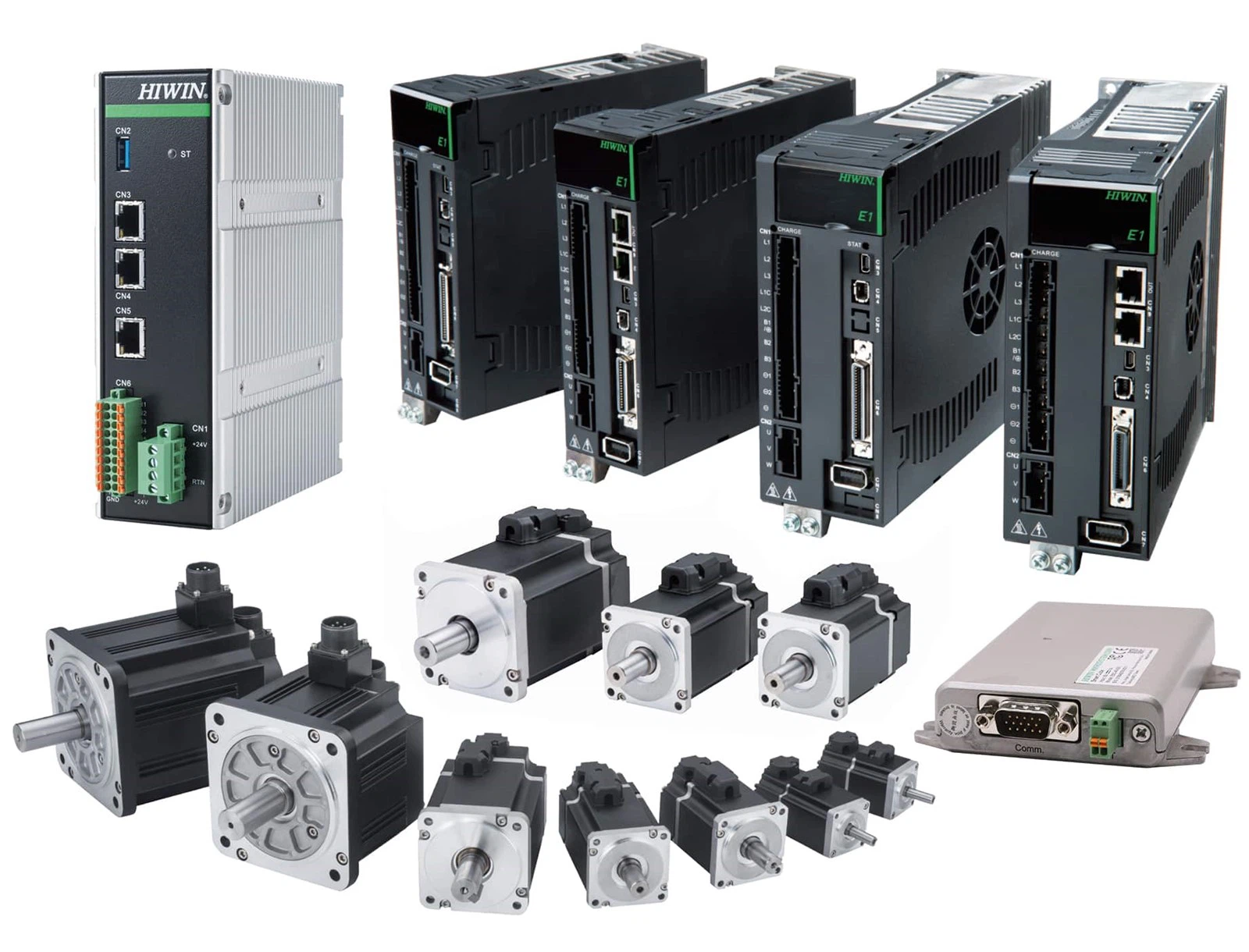
Single Axis Control Servo Drives
1. Core Advantages
High-Precision Control: A closed-loop system (encoder feedback) achieves micron-level positioning accuracy, with errors within ±0.001mm.
Fast Response: Millisecond-level dynamic adjustment capability makes it suitable for frequent starts, stops, or reverse motion.
Simplified Structure: Compared to multi-axis drives, single-axis designs are simpler, resulting in lower costs and easier maintenance.
2. Typical Application Scenarios
Automation Equipment: For example, feed axes in CNC machine tools and extruders in 3D printers.
Precision Positioning Systems: For applications requiring quantitative displacement or limit control (such as slides and conveyors).
Universal Single Axis Pulse Type Servo Drive
3. Wiring and Debugging Tips
Power Supply: A 24V DC power supply is required. Pay attention to the corresponding terminals for the pulse signal (PU+, PU-) and direction signal (DR+, DR-). Parameter Settings: Adjust speed, revolutions, delay, and other parameters via the panel, and support triggering actions with external buttons.
Troubleshooting: To disable an axis, modify the parameters (e.g., set to -128 for FANUC systems) and disconnect the encoder feedback.
4. Selection Recommendations
Power Supply: For units under 2000W, a single-phase 220V power supply is recommended; higher power units require a three-phase power supply.

Our Factory
Servo Motors, Amplifiers and Motion Controllers-Best Servo Drive Supplier in China


How to debug a single-axis servo drive?
1. Basic Wiring and Parameter Configuration
1.1 Power and Signal Connections
Ensure the 24V control power supply is stable and the power lines (U/V/W) and encoder wiring are in the correct order to avoid reverse connection and alarms.
The pulse signals (PU+, PU-) and direction signals (DR+, DR-) must match those of the controller. Differential signals are recommended for long-distance transmission.
1.2 Enable Signal and Mode Selection
Use parameter (e.g., parameter 53) to set the enable mode (normally open/normally closed). Select the control mode (position/speed/torque) based on the application.
If an absolute encoder is required, connect a battery and set the parameter (e.g., Pn50B0 = 1).
2. Core Parameter Tuning
2.1 Subdivision and Pulse Equivalent
Modify the subdivision parameter (e.g., setting parameter 003 to 12098) to ensure the number of pulses per revolution (e.g., 10,000 pulses/revolution) matches the mechanical travel.
For reverse direction, adjust the parameter (e.g., setting parameter 15 to 12) or change the motor phase sequence.
2.2 Dynamic Performance Optimization
Speed Loop Gain: Increase gradually to reduce overshoot. If vibration occurs, reduce the gain or add a filter.
Inertia Ratio: Use auto-tuning (e.g., Pn103) or manually set to match the load inertia.
3. Mechanical Verification and Troubleshooting
3.1 No-load Test
Run the machine at low speed in JOG mode to confirm the correct direction. Gradually accelerate to the rated value and monitor the current waveform.
Load Test
During the step response test, observe the speed curve with an oscilloscope and adjust the integration time to eliminate steady-state errors.
Test positioning accuracy (e.g., 10,000 pulses corresponds to 10 mm). The error must be within ±0.01 mm.
3.2 Common Alarm Handling
Speed Deviation: Check the mechanical coupling or restore factory settings.
Encoder Fault: Replace the cable or encoder and ensure good grounding.
3.3 Extended Function Settings
Vibration Suppression: Enable a notch filter to eliminate resonance at specific frequencies.
Soft Start/Stop: Reduce mechanical shock and extend service life.
After commissioning, it is recommended to back up parameters and regularly check the status of mechanical components (such as couplings and guide rails).
Hot Tags: single axis servo drive, China single axis servo drive manufacturers, suppliers, factory, AC Servo Motor Driver, AC Servo Motors and Drives, Compact Servo Drives, Electric Servo Motors and Drives, Low Voltage Servo Drive, Servo Motors Drives


