

In today's industrial automation landscape, servo systems have completely supplanted standard motors across a wide range of applications-including machine tools, robotic manipulators, packaging machinery, die-cutting machines, and transfer systems.
In this field, a lack of proficiency with servo systems is essentially tantamount to possessing only "half a skillset" in electrical engineering. Yet, many technicians still panic the moment they encounter a servo system: they are intimidated by the sheer volume of wiring and dense terminal blocks, struggle to interpret alarm codes, and face issues like vibration or step loss the moment they attempt to run the system.
In today's article, we will cut the fluff and skip the abstract theory. Instead, we will focus strictly on the practical essentials: how to wire the system, how to configure parameters, and how to troubleshoot alarms. We will outline a universal approach applicable to major brands-such as Mitsubishi, Panasonic, Delta, Inovance, and Hecuan-ensuring that by the time you finish reading, you will be ready to dive in and get to work immediately.
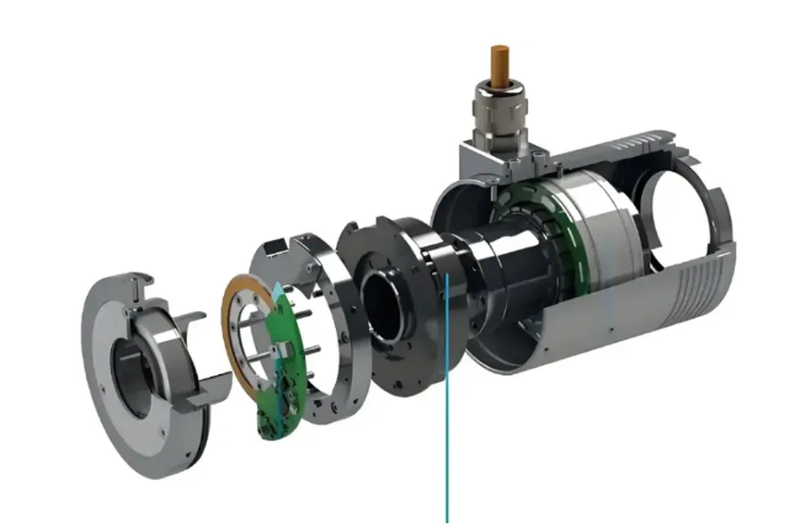
First, Understand This: A Servo System Consists of Just 4 Components
No matter how complex a servo system may seem, when broken down, it consists of only four elements: the servo drive, the servo motor, the encoder cable, and the power/control cables. Remember this rule of thumb: High-voltage power runs the motor; low-voltage signals handle control; and the encoder signal runs separately-never mix them together.
Standard Servo Wiring (The Most Universal Method Online-Follow This to Avoid Damaging the Unit)
High-Voltage Section (Power Supply)
- L1, L2, L3 → Connect to a 3-phase 380V power supply (low-power units may also use single-phase 220V).
- U, V, W → Connect to the three-phase leads of the servo motor.
- Ground (PE) → Must be connected; failure to do so results in severe electrical noise and frequent error alarms.
⚠️ Important Note: The U, V, and W terminals can be connected in any order. If the motor rotation direction is reversed, simply swap any two of these phases-this will absolutely *not* burn out the servo drive!
Control Section (The 6 Most Commonly Used Wires)
For servo drives of all brands, the absolute core consists of these 6 terminals:
- SON / SRV → Servo Enable (ON = Servo powered up and engaged/clamped)
- STOP / ALM-R → Alarm Reset
- P-OT / N-OT → Positive / Negative Limit (Normally Closed)
- COM → Common Terminal (Typically connected to 0V)
Universal Control Logic:
- Active Low: COM connects to +24V; Signal connects to 0V
- Active High: COM connects to 0V; Signal connects to +24V
- 90% of Field Wiring Configurations: COM = +24V; Input Signal = Active at 0V
Encoder Cable (Never Connect or Disconnect While Powered On)
Function: Transmits position and velocity signals only. It must be a shielded cable, must be routed separately, and must be kept away from power cables. It is absolutely forbidden to connect or disconnect the cable while the system is powered on; doing so will instantly burn out the encoder.
Servo Control Modes: 3 Types (Incorrect Selection Causes Vibration)
Position Mode (Most Commonly Used)
Pulse-and-Direction Control: The PLC issues pulses, and the servo motor executes a specific displacement.
Applications: Positioning, cutting, transfer operations, robotic manipulators.
Speed Mode
Speed Control via Analog Signal: Regulated using a 0–10V analog input.
Applications: Winding, unwinding, synchronization.
Torque Mode
Force/Torque Control: Regulates the output force.
Applications: Tension control, coil winding machines.
90% of Equipment = Position Mode (Pulse Control)
5 Essential Parameters for Beginners (Set These, and It Runs)
Regardless of the brand, if you configure these 5 parameters correctly, you've basically got it working:
- Control Mode: Position Mode / Pulse Mode
- Electronic Gear Ratio: Determines the distance traveled per single pulse.
- Acceleration Time: 100–300 ms (Do not set this too low, or it will cause vibration).
- Deceleration Time: 100–300 ms
- Inertia Ratio / Rigidity: Start with a low default setting; if there is no vibration, gradually increase it.
Top 8 High-Frequency Servo Alarms (Troubleshooting Guide for On-Site Repair)
Overload Alarm (ALM / OLC)
Motor stalled or load is excessive; damaged bearings or mechanical jamming; rigidity setting is too high or control parameters are too aggressive.
Overvoltage Alarm (OVC)
Deceleration rate is too fast; braking resistor is disconnected or faulty; power supply voltage is too high.
Undervoltage Alarm (LVC)
Missing phase in the power supply; loose wiring connections; momentary power interruption.
Overcurrent Alarm (OC)
Motor wiring short circuit; damaged drive module; if the alarm triggers immediately upon power-up, it is almost certainly a hardware failure.
Excessive Position Deviation (ERR / POS)
Load is too heavy for the motor to drive; lost encoder pulses; rigidity setting is too low, preventing the system from keeping up.
Encoder Fault (ENC / EG)
Broken encoder wiring or signal interference; encoder damaged by hot-plugging (connecting/disconnecting while powered on); motor power cables and encoder cables routed too closely together.
Limit Alarm (LT / P-OT)
Faulty limit switch; loose wiring connection; mechanical travel has hit the physical limit switch.
Servo Not Enabled (SON)
SON signal is not being provided; PLC is not outputting the enable signal; wiring error.
The 5 Most Common Mistakes Made by Beginners
- Hot-plugging (connecting/disconnecting while powered on) encoder cables → Almost guaranteed to damage the unit.
- Routing motor cables and encoder cables together → High electromagnetic interference, leading to erratic alarms.
- Setting rigidity (gain) too high → The motor emits high-pitched squeals, shakes, or whines.
- Failure to connect the Enable signal → The motor remains unresponsive regardless of the commands sent.
- Failure to establish a proper ground connection → The system operates normally at times but occasionally exhibits erratic, jumpy behavior.
Conclusion
Servo systems may appear complex, but in reality, their wiring configurations, parameters, and alarm codes are largely standardized. Bookmark this guide; the next time you encounter a servo system in the field, simply follow these three steps-check the wiring, check the parameters, and check the alarms-and you will likely be able to resolve the issue.
Formatting Notes
This document has been fully organized to mirror the structure of the original source material. It retains all core concepts, operational guidelines, and important precautions, and can be directly copied into applications such as Microsoft Word or WPS for saving and future reference.