

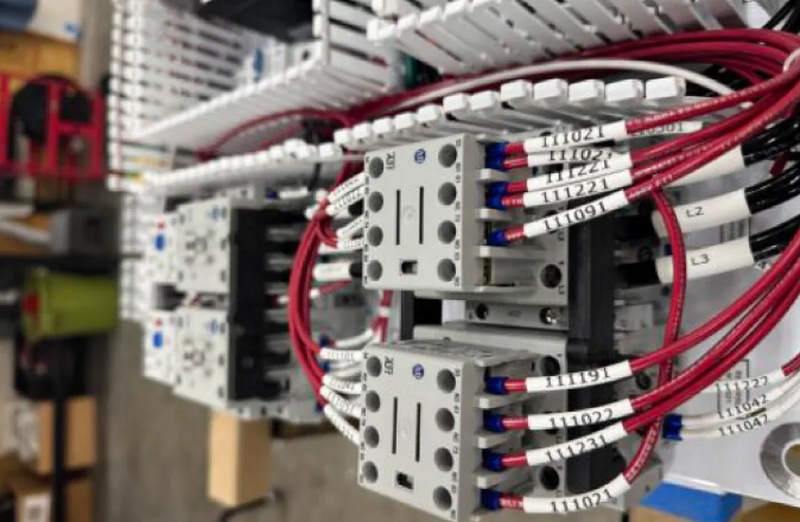
Modern motor control systems have elevated efficiency, precision, and adaptability to new levels. Compared to traditional motor systems, they offer significant advantages in terms of performance, cost savings, and scalability.
Motor control serves as a core foundation within the realms of modern technology and automation, directly influencing energy efficiency, control precision, and system adaptability. Motion control technology has made tremendous strides; the performance of modern motor control systems now far surpasses that of traditional setups relying solely on contactors and overload protection devices.
While traditional motor starters remain a low-cost and operationally simple option, they exhibit distinct shortcomings in meeting critical operational cost requirements and long-term performance demands. These limitations have created a niche for modern solutions-such as variable frequency drives (VFDs) and servo drives. These modern solutions offer distinct advantages, including superior energy efficiency, enhanced precision, and the flexibility to adapt to future requirements.
Variable frequency drives can significantly reduce power consumption and operational costs by modulating motor speed to match specific workload demands. Servo drives, meanwhile, can boost energy utilization efficiency through the application of regenerative braking technology. During braking cycles, servo drives are capable of capturing energy and feeding it back into the power grid, thereby further optimizing overall energy efficiency performance.
Beyond their energy-saving benefits, these advanced systems boast exceptional precision, enabling precise control over speed and position-a capability that is critical for applications such as robotics, Computer Numerical Control (CNC) machining, and coordinated motion systems. Whereas traditional starters merely cut off power-leaving the motor to coast to a stop on its own-VFDs and servo drives actively manage the motor's deceleration process, thereby enhancing production line performance and facilitating synchronized operation across multiple systems.
As various industries continue to evolve-necessitating adaptation to new requirements regarding production, quality, and safety-advanced VFDs have also been designed to support a wide array of communication protocols, facilitating their seamless integration into increasingly complex control environments. Key areas of advancement in motor control include energy efficiency, maintenance management, scalability, and control precision.
Enhanced Energy Efficiency
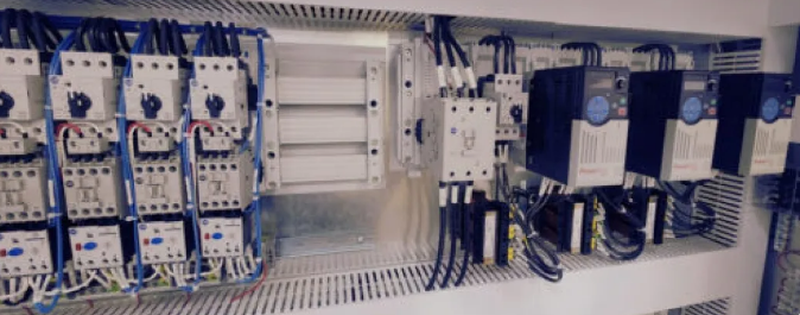
One of the most significant differences between traditional motor starters and modern drives lies in energy efficiency. Once activated, traditional motor starters supply the motor with all available energy, regardless of the actual demands of the workload. This mode of operation results in substantial energy waste and unnecessary costs.
In contrast-although their initial cost is two to three times that of traditional motor starters-Variable Frequency Drives (VFDs) can dynamically adjust energy consumption based on workload requirements, thereby achieving significant energy savings and reducing operating costs. Servo drives with regenerative braking capabilities take this a step further: not only do they adjust energy consumption according to load demands, but they also capture the energy generated during motor braking and feed it back into the power grid. This further reduces energy consumption while simultaneously lessening reliance on the power grid.
Streamlined Maintenance
While the components of traditional motor starters are easy to replace and simple to maintain, they are prone to wear and tear-a phenomenon that is particularly pronounced in systems where the motor undergoes frequent starting and stopping cycles. In contrast, VFDs and servo drives utilize solid-state circuitry, resulting in significantly less wear during electrical switching operations. Furthermore, these systems feature built-in monitoring tools capable of providing insights into the operational health of both the motor and the drive by analyzing current consumption trends. This capability facilitates easier fault prediction and the scheduling of maintenance downtime, thereby effectively mitigating the risk of unexpected system outages.
Future-Proofing Mechanical Equipment
The continuous evolution of industrial machinery means that systems often require upgrades to meet new production demands, enhance product quality, or adapt to ever-changing regulatory requirements. While traditional motor starters remain functional, they often lack the flexibility needed to accommodate these changes. In contrast, modern motor control systems feature built-in scalability and adaptability, making future expansion both more manageable and cost-effective.
For instance, a variable frequency drive (VFD) can be sized slightly larger than the motor it currently drives. This allows for easy motor upgrades-to increase torque or horsepower-without the need to replace the VFD itself. This approach not only helps boost equipment performance but also extends the hardware's service life by allowing it to operate below its maximum capacity.
Furthermore, VFDs and servo drives support both traditional hardwired control systems and advanced communication protocols such as PROFINET and Modbus. This dual capability enables a seamless transition from basic motor control to complex automation control without the need for additional hardware. Initially, the drive can operate using existing control configurations; however, when a higher level of control becomes necessary, it can be seamlessly integrated into a more sophisticated system via communication protocols.
Finally, safety stands out as a key highlight of modern motor control systems. As safety regulations become increasingly stringent-and as machinery operates at higher speeds and presents greater potential hazards-systems must be designed to meet these rigorous requirements. Many VFDs and servo drives come equipped with integrated safety functions-such as Safe Torque Off (STO) or Safe Limited Speed (SLS)-which can be incorporated into emergency stop systems with minimal additional wiring.
In contrast, traditional motor starter assemblies typically require the installation of separate safety contactors or relays to comply with updated safety standards. Investing in drives with built-in safety features not only ensures compliance with current regulations but also future-proofs the system against evolving safety requirements.
Enhanced Control Precision
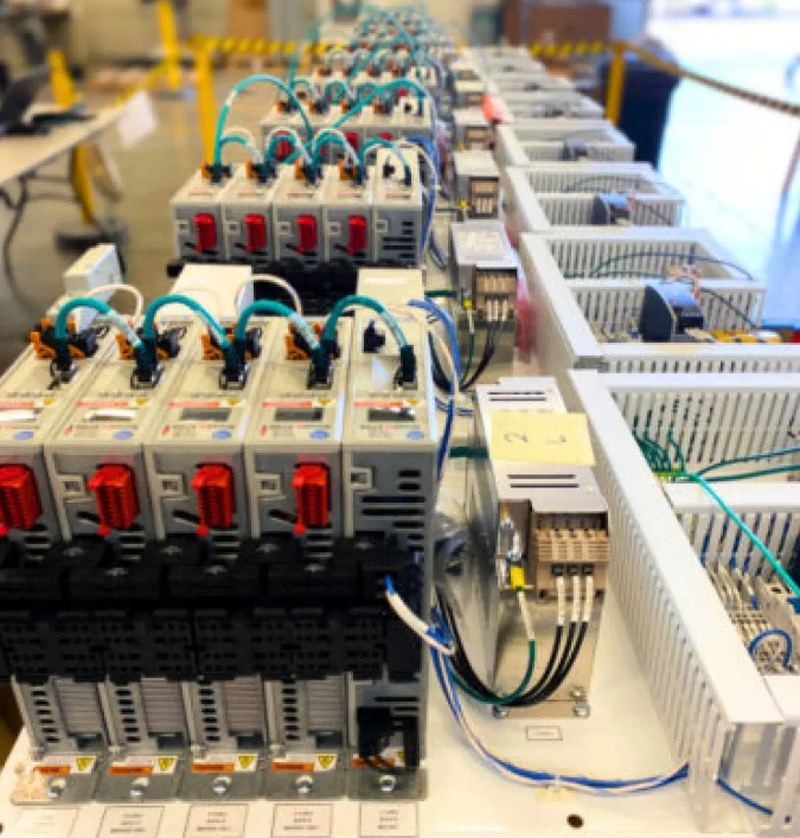
Beyond the ability to adjust motor speed, a significant advantage of variable frequency drives (VFDs) and servo drives lies in the heightened precision they offer during motor operation. They enable highly accurate positioning and torque control, making them ideally suited for applications with extremely stringent precision requirements-such as robotics, computer numerical control (CNC) machine tools, and other coordinated motion systems.
In applications utilizing traditional motor starters, cutting off the power supply causes the motor to coast to a stop. This coasting behavior makes it difficult to precisely determine the exact stopping position, as one must account for the inherent delay involved in the motor coming to rest. In contrast, VFDs can actively and gradually decelerate the motor or bring it to a dynamic stop, rather than allowing it to coast. Servo drives equipped with closed-loop feedback via motor encoders can actively stop the motor based on its angular position-rather than merely its physical location in space. This enhanced precision not only ensures smoother operation of production lines but also facilitates superior synchronization between multiple systems, thereby boosting overall production efficiency and consistency.
Comprehensive Considerations for Evaluating Motor Control Systems
While the use of VFDs and servo drives offers numerous advantages, it also presents certain challenges:
Power Quality: Due to their sensitive high-frequency power circuitry, VFDs and servo drives can sometimes introduce power quality issues. To safeguard the system, additional equipment-such as line reactors or filters-may be required to prevent interference affecting both the drives and the power supply.
Motor Cabling: The high-frequency switching outputs generated by VFDs and servo drives can induce electrical noise in nearby cabling and equipment. Consequently, connecting the motor requires the use of specialized, shielded cables, which typically entail higher costs. Furthermore, the motor's power rating must be sufficient to withstand the high-frequency switching power supplied by the drive to prevent potential damage.
When evaluating motor control systems, one must look beyond the initial purchase price and take a holistic view that encompasses long-term efficiency, adaptability, and overall system reliability. While traditional motor starters may appear attractive due to their low cost, they lack the versatility and precision inherent in modern solutions such as VFDs and servo drives. These advanced drive systems not only deliver superior performance with reduced maintenance requirements but also feature built-in scalability, offering significant advantages in terms of energy conservation, precise control, and future-proofing capabilities. Selecting the appropriate motor control system from the very outset is a strategic decision. This choice not only optimizes equipment performance but also yields substantial savings-in terms of time, cost, and resources-throughout the entire lifecycle of the equipment.