


Zhejiang Tonghang E-Drive Technology Co., Ltd. is one of the most reliable manufacturers and suppliers of 3 phase servo motor driver in China. The company has world-leading production equipment and strong manufacturing capabilities. Please rest assured to buy the best 3 phase servo motor driver from our factory.
What Is a 3 Phase Servo Motor Driver?
A 3 Phase Servo Motor Driver is an electronic device designed to regulate the operation of a three-phase servo motor. It receives commands from an external controller, processes feedback signals, and adjusts the electrical output supplied to the motor. This coordinated operation allows machinery to manage rotational speed, movement position, and output torque according to the requirements of a production process.
Unlike a conventional motor starter, a servo drive is designed for applications that require more detailed motion regulation and feedback-based operation. An AC Servo Motor Controller works as part of this control arrangement, connecting the machine's command system with the motor and its feedback components. Typical applications include CNC equipment, automated assembly machinery, industrial handling systems, and precision production equipment.
For equipment manufacturers, selecting the right drive involves evaluating the motor specifications, power supply, encoder feedback, control interface, and working conditions. These factors determine whether the selected system can be integrated properly into the intended machine.
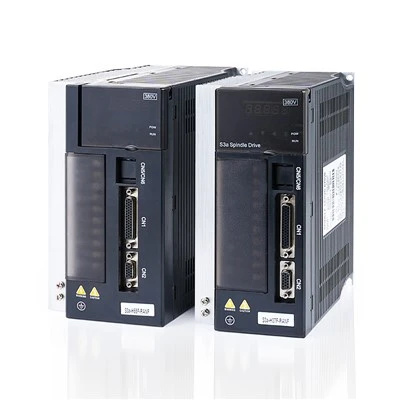
How Three-Phase Power Is Used in Servo Drive Systems
A three-phase servo system uses electrical power supplied through three-phase connections to operate a compatible servo drive and motor. The drive processes the incoming power and controls the motor output according to the configured operating commands. The actual input voltage and wiring arrangement depend on the selected drive model, so engineers should confirm the electrical requirements before connecting the equipment.
In a typical installation, the power circuit and control circuit perform different tasks. The power circuit supplies the energy required by the motor, while the control circuit handles command signals, feedback information, and communication with the host controller.
Main elements of a three-phase servo arrangement:
- Three-phase power input
- Servo drive power conversion section
- Three-phase servo motor
- Encoder feedback connection
- PLC or motion controller interface
- Protective grounding and electrical wiring
These components need to be matched as one electrical system. A drive designed for a particular supply voltage or motor specification should not be connected to an incompatible motor or power source. Wiring diagrams and product documentation should always be checked before installation.
Vector Control and Three-Loop Regulation
Modern servo drives commonly use vector control to regulate motor operation. This approach separates motor current into components associated with magnetic flux and torque production, allowing the drive to manage the motor's response more precisely than basic open-loop speed regulation.
A commonly used servo control structure contains three coordinated loops. Each loop has a different task, and their interaction affects the overall response of the motor.
Current loop
The current loop regulates motor current according to the internal control reference. It directly influences torque generation and provides the inner control layer for the drive.
Speed loop
The speed loop compares the commanded rotational speed with the feedback value and calculates the required correction. Its response affects how the motor handles speed changes and variations in mechanical load.
Position loop
When position control is selected, the position loop evaluates the difference between the target position and the feedback position. It generates the command needed to reduce the position error during movement.
The three loops operate as a coordinated control structure. Their settings should be adjusted according to the motor, mechanical transmission, load inertia, and required movement characteristics. Incorrect tuning may cause vibration, overshoot, delayed response, or unstable operation.
Encoder Feedback and Motor Speed Detection
Feedback is an essential part of closed-loop servo operation. An encoder measures motor movement and provides signals that the drive can use to determine rotational position and speed. The quality and compatibility of the feedback arrangement influence the drive's ability to respond to movement commands.
Incremental encoders are commonly used in servo applications. They generate pulse signals as the motor shaft rotates, allowing the control system to calculate movement changes. Absolute encoders provide position information through an encoded value and are used in applications where the position reference and feedback requirements call for this type of device.
The M/T speed-detection method is one approach used in digital speed measurement. It combines information related to pulse count and pulse timing to estimate rotational speed. The applicable measurement method and performance depend on the drive's internal design, encoder resolution, and operating conditions.
Encoder selection considerations:
Feedback type: Confirm whether the motor uses incremental or absolute encoder feedback and whether the drive supports that specific type.
Signal compatibility: Check the encoder's electrical interface, signal format, and connection requirements.
Resolution: Review encoder resolution in relation to the positioning and speed measurement requirements of the machine.
Mechanical connection: Confirm shaft dimensions, mounting arrangement, and feedback cable routing before installation.
Using a compatible feedback device helps the drive obtain usable motor information for closed-loop regulation. It is important to check the technical documentation of the selected motor and drive rather than assuming that all encoder types can be connected interchangeably.
Main Functions in an Industrial Servo System
A servo drive does more than supply electrical power to a motor. It also interprets commands, processes feedback, and manages motor behavior during different stages of machine operation. The available functions vary by model and control configuration, but several functions are commonly considered when evaluating a drive for industrial equipment.
Position regulation
Position commands allow the motor to move toward specified coordinates or travel distances. This function is useful for indexing, feeding, and positioning mechanisms.
Speed regulation
Speed commands define the required rotational speed. The drive adjusts its output according to the configured speed reference and feedback information.
Torque regulation
Torque commands are used when the application needs to manage motor output in relation to mechanical resistance, such as winding or pressing operations.
Fault monitoring
Depending on the model, the drive can monitor operating conditions and report abnormal states through its display or supported communication interface.
Parameter configuration
Engineers can configure relevant operating parameters to match the selected motor and machine requirements. Available settings depend on the drive series.
These functions help equipment manufacturers build motion systems around specific production tasks. The required control mode, command source, and feedback arrangement should be identified before selecting the drive.
Typical Industrial Applications
Three-phase servo technology is used in equipment where controlled motor movement is important to the production process. The required drive configuration depends on the machine structure, working cycle, and mechanical load.
Industrial Robots
Servo drives regulate the movement of robot joints and positioning axes. Multiple motors may be coordinated to perform programmed handling and assembly tasks.
Automated Production Lines
Feeding, transfer, indexing, and material handling mechanisms use controlled motor movement to coordinate different production stages.
CNC Machining Centers
Servo systems control machine axes and support programmed movement during positioning and machining operations.
Precision Manufacturing Equipment
Electronic assembly, automated inspection, and specialized production machines may use servo motion to coordinate repeatable mechanical actions.
How to Select a Suitable Three-Phase Servo Drive
Choosing a drive for industrial machinery requires more than checking whether the power supply is three-phase. The drive must match the motor's electrical characteristics and the machine's operating requirements. The following points can help buyers prepare the technical information needed for model selection.
1. Motor rated power and current
Provide the motor's rated power, rated current, rated speed, and other available nameplate information. The selected drive must be compatible with the motor's electrical requirements.
2. Power supply specification
Confirm the available input voltage, phase configuration, and frequency at the installation site. Do not assume that all three-phase drives use the same input voltage range.
3. Encoder and feedback type
Identify whether the motor uses incremental or absolute feedback. Confirm the encoder interface and compatibility with the intended drive model.
4. Control command and communication
Determine whether the machine uses pulse commands, analog signals, or an industrial communication protocol. Check the drive's supported interfaces and the controller's corresponding capabilities.
5. Mechanical and installation conditions
Review the motor mounting dimensions, shaft arrangement, cable length, cabinet space, ventilation, and environmental conditions.
6. Operating cycle and load characteristics
Describe the acceleration and deceleration requirements, movement frequency, load inertia, and expected working cycle. These details help engineers evaluate whether the selected drive and motor combination is appropriate.
For an AC Servo Motor Controller project, providing complete motor and machine information makes technical evaluation more accurate. It also helps reduce unnecessary model changes during electrical design and equipment commissioning.
Installation and Commissioning Considerations
Correct installation is important for stable operation. Before energizing the system, technicians should review the wiring diagram, verify the power supply, and confirm that the motor and feedback connections correspond to the selected drive. Protective grounding and cable separation should follow the applicable electrical design requirements.
After the wiring inspection, commissioning can proceed through a controlled sequence. Initial movement tests should be carried out under suitable conditions, with the mechanical load and surrounding equipment taken into account.
Recommended commissioning checks:
Electrical inspection: Check input power, grounding, motor terminals, feedback wiring, and control connections.
Parameter confirmation: Verify the motor model, encoder configuration, control mode, and other parameters required by the selected drive.
Direction test: Confirm that the motor rotates in the intended direction and that the mechanical transmission moves correctly.
Response evaluation: Test acceleration, deceleration, speed changes, and positioning behavior under controlled conditions.
Alarm and recovery test: Check the available fault indications and confirm that the maintenance team understands the corresponding inspection procedures.
Parameter tuning should be based on the actual motor and mechanical load. Excessively aggressive settings may cause vibration or overshoot, while unsuitable response settings may lead to sluggish movement. The final configuration should be verified through machine testing rather than relying only on initial software settings.
Why Choose Tonghang 3 Phase Servo Motor Driver?
Zhejiang (Hangzhou) Tonghang E-Drive Technology Co., Ltd. is a national high-tech enterprise founded in 2017. The company integrates research and development, production, sales, and after-sales service, with a product range covering servo drives, servo motors, high-speed door servo motor and controller systems, and integrated motor-drive products.
Multiple Product Families
Tonghang has developed different servo drive series for varied equipment requirements. Its product development includes general-purpose drives, single-board designs, absolute feedback products, and bus communication models. This range gives equipment manufacturers several product categories to consider during project evaluation.
Engineering Consultation During Project Planning
Customers can discuss motor specifications, control requirements, and equipment applications with the engineering team before confirming a model. This early communication helps identify important compatibility points and clarify the intended configuration.
Manufacturing and Testing Facilities
The company operates a 5,000㎡ clean workshop equipped with automated machinery and precision testing instruments. These facilities support production operations and product inspection throughout the manufacturing process.
Product Information and Project Coordination
Tonghang can provide relevant product drawings and performance information during project coordination. Specification discussions and recommendations can be considered according to customer requirements and feedback.
After-Sales Technical Assistance
The company provides responses to product inquiries and technical support after purchase. Customers can share model information and application details to help the team understand questions related to product use and configuration.
Development Experience in Servo Technology
Since its establishment, Tonghang has introduced several product generations, including the T3, T5, S3, M-series bus products, and T3D single-board series. This development history reflects the company's continued work in servo drive and electric drive technology.

Frequently Asked Questions
1. What is the difference between a three-phase servo drive and a standard frequency inverter?
A standard frequency inverter is commonly used to regulate the speed of an AC motor. A servo drive is designed for feedback-based motion regulation and can support more precise control of position, speed, and torque when paired with a compatible servo motor and feedback device. The available functions depend on the specific product model.
2. Which motors can be connected to a three-phase servo drive?
Compatibility depends on the drive design and motor specifications. Many servo drives are designed for AC permanent magnet synchronous servo motors. Before connection, check rated voltage, current, power, encoder type, feedback interface, and the manufacturer's motor compatibility information.
3. What is the purpose of the current, speed, and position loops?
The current loop regulates motor current and contributes to torque generation. The speed loop manages rotational speed according to the reference and feedback values. The position loop controls movement toward the commanded position. Their coordinated operation supports closed-loop servo regulation.
4. Does a three-phase servo drive always require an absolute encoder?
No. Encoder requirements depend on the drive model and application. Some systems use incremental encoders, while others support absolute encoder feedback. Buyers should verify the supported feedback type and electrical interface before selecting a motor and drive combination.
5. What information should I provide when requesting a quotation?
Provide the motor rated power, rated voltage, rated current, encoder type, control method, communication requirements, machine application, and installation conditions. If available, include the motor nameplate, wiring diagram, and relevant equipment drawings.
6. Can Tonghang discuss customized requirements for servo drive projects?
Tonghang provides engineering consultation and project communication for product selection and configuration. Customers can submit their application details and technical requirements so the team can review the relevant product range and discuss possible arrangements.
Request Technical Information for Your Servo Drive Project
Choosing a suitable three-phase drive requires a clear understanding of the motor, power supply, encoder, command interface, and mechanical workload. Tonghang works with equipment manufacturers to review these requirements and discuss relevant servo drive series for industrial applications.
Send your motor nameplate, electrical drawings, PLC information, or machine application description to the Tonghang team. You can use these details to start a technical discussion about an AC Servo Motor Controller configuration for your equipment.
Hot Tags: 3 phase servo motor driver, China 3 phase servo motor driver manufacturers, suppliers, factory, Digital Servo Drive, Electric Servo Motors and Drives, CNC Servo Drive, AC Servo Amplifier, 3 Phase Servo Motor Driver, Compact Servo Drives


