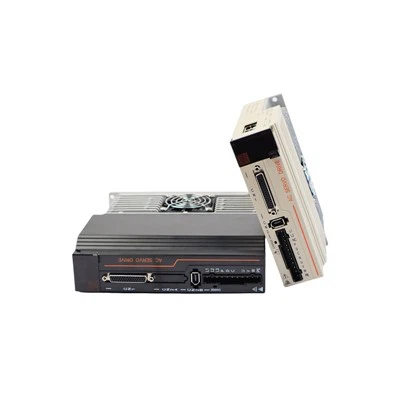
Zhejiang Tonghang E-Drive Technology Co., Ltd. is one of the most reliable manufacturers and suppliers of industrial ac servo motor in China. The company has world-leading production equipment and strong manufacturing capabilities. Please rest assured to buy the best industrial ac servo motor from our factory.
Industrial AC Servo Motor plays an important role in modern manufacturing equipment where machine movement must follow defined commands with consistent timing and accuracy. By working with a compatible servo drive and motion controller, it helps convert electrical control signals into regulated mechanical movement for automated production processes.
In manufacturing environments, motion control affects more than the movement of a single machine component. It can influence product dimensions, processing consistency, production rhythm, and coordination between different working stations. A properly configured servo system gives equipment manufacturers greater control over repetitive operations, making it suitable for machinery used in metalworking, electronic assembly, packaging, printing, and material processing.
AC Servo Motor Technical Parameters

Motion Synchronization in Automated Production Equipment
Many production machines contain several moving components that must operate in a coordinated sequence. Feeding units, cutting mechanisms, transfer platforms, rotating tables, and processing heads may need to start, stop, or change speed at specific moments. If the movement of one component does not match the rest of the process, production consistency can be affected.
A servo motion-control system allows machine designers to coordinate individual movement axes through a controller and corresponding drive units. The control program can define movement commands, operating sequences, and synchronization relationships according to the production process.
Feeding and processing:
Material feeding can be coordinated with cutting, forming, or processing operations to maintain a consistent production sequence.
Rotary positioning:
Rotating worktables and indexing mechanisms can move to programmed positions before the next operation begins.
Multi-axis equipment:
Several motion axes can work according to a shared control sequence, supporting coordinated machine functions.
Transfer mechanisms:
Conveying and handling components can be integrated into the machine's operating cycle to reduce unnecessary waiting between stations.

Improving Production Consistency Through Controlled Movement
In repetitive manufacturing, small differences in machine movement can accumulate over multiple production cycles. Inaccurate stopping positions, inconsistent feeding distances, or poorly coordinated movements may lead to dimensional variation, material waste, and additional inspection work.
Servo-based motion control helps equipment manufacturers define and repeat movement commands through a closed-loop control arrangement. Feedback information allows the drive system to regulate motor operation according to the command and actual motion condition. The result is a more controllable process for applications that require repeatable positioning and defined movement sequences.
For example, an automated cutting machine may need to feed material by a specified distance before each cutting operation. A labeling machine may need to coordinate product movement with the position of a label applicator. In both cases, the motion-control system needs to maintain a consistent relationship between machine actions.
It is important to understand that final production accuracy also depends on the machine frame, transmission components, sensors, control program, and installation quality. Motor selection should therefore be considered as part of the complete equipment design rather than as an isolated purchasing decision.
Industrial AC Servo Motor Applications in Process Automation
Different manufacturing processes require different movement patterns. Some machines operate with continuous rotation, while others perform repeated positioning, intermittent feeding, or rapid changes between operating states. The motion-control configuration should reflect the production task and the way the equipment is used.
Metal processing equipment: Supports controlled movement of machine axes and positioning mechanisms during cutting, forming, and related operations.
Electronic manufacturing: Can be incorporated into automated positioning, component transfer, and assembly equipment.
Packaging and filling lines: Helps coordinate product transport, packaging material feeding, and machine actions within a defined sequence.
Textile machinery: Supports controlled movement in feeding, winding, and other automated textile production processes.
For equipment builders, the application description should include the actual process sequence instead of only naming the industry. Information such as movement distance, cycle frequency, positioning points, and the number of controlled axes gives engineers a clearer understanding of the required motion behavior.
How Servo Control Influences Machine Productivity
Machine productivity is determined by the complete production process, including material preparation, processing time, transfer time, inspection, and equipment availability. Motion-control performance is one factor that can influence how efficiently these stages work together.
When movement commands are properly coordinated, equipment designers can organize operating sequences more effectively. For example, a machine may complete material positioning while another mechanism prepares for the next processing step. Coordinated actions can help reduce unnecessary idle periods without compromising the requirements of the production process.
Another consideration is the relationship between operating speed and process quality. Increasing machine speed does not automatically improve output if the material cannot be processed accurately or if other machine stations cannot keep pace. A suitable motion-control configuration should balance cycle time, movement accuracy, mechanical limitations, and product quality requirements.
Manufacturers evaluating a machine upgrade should compare actual production indicators, such as cycle time, rejected units, downtime, and maintenance frequency. These measurements provide a more practical basis for assessing whether a motion-control improvement is delivering value.
Electrical Integration and Control System Compatibility
Successful integration requires coordination between electrical components and the machine control architecture. The motor, servo drive, controller, feedback device, and associated cables must be considered together during system design.
The controller sends motion commands to the drive, while feedback information supports the regulation of motor movement. Depending on the machine architecture, the control system may use pulse commands or an applicable communication interface. The actual connection method and supported functions should always be confirmed against the documentation for the selected equipment.
For a new machine project, electrical engineers should prepare the control architecture and component list before purchasing. For an existing machine, the current drive model, feedback arrangement, wiring configuration, and control signals should be recorded before replacing a motor or changing the drive system.
Machine electrical diagram and control-system overview
Existing motor and servo drive model information
Feedback device and connection details
Required motion sequence and operating conditions
Maintenance Planning for Long-Term Equipment Operation
Maintenance planning should be incorporated into equipment management from the beginning of a project. Even when the electrical control system is operating normally, mechanical wear, loose connections, contamination, and changes in the working environment may affect overall machine performance.
Regular inspection helps maintenance teams identify abnormal conditions before they develop into larger production interruptions. Inspection frequency should be determined according to the machine manufacturer's instructions, operating environment, and actual duty cycle.
Connection inspection: Check power cables, feedback connectors, grounding, and cable protection for signs of loosening or damage.
Mechanical inspection: Examine couplings, mounting points, transmission components, and the condition of connected machine parts.
Operating condition review: Monitor unusual noise, vibration, temperature changes, and unexpected machine alarms.
Parameter documentation: Keep records of drive settings, maintenance actions, and replacement component information for future troubleshooting.
When a machine shows abnormal movement or repeated alarms, maintenance personnel should review the complete system instead of immediately assuming that the motor is the source of the problem. Mechanical resistance, feedback signals, wiring, drive settings, and controller commands may all need to be checked.
Why Choose Tonghang for Industrial AC Servo Motor Projects?

Zhejiang (Hangzhou) Tonghang E-Drive Technology Co., Ltd. was established in 2017 and specializes in the research, development, manufacturing, and sales of electric drive products. Its business also includes after-sales technical services, providing customers with support throughout different stages of equipment sourcing and application.
The company's product range covers servo drives, servo motors, high-speed door servo motor and controller systems, and related integrated drive products. These product categories serve equipment manufacturers and industrial users working with different automation requirements.
Tonghang has a 5,000㎡ clean workshop equipped with automated production machinery and precision testing instruments. These facilities provide a manufacturing environment for product assembly, process management, and inspection. The company continues to focus on electric drive technology and the development of products for industrial motion-control applications.
Project communication is an important part of Tonghang's customer service. During the early inquiry stage, customers can discuss their equipment type, operating conditions, and technical expectations with the team. Relevant product information and engineering consultation help clarify the requirements before a purchasing decision is made.
For equipment manufacturers with specific project requirements, sharing application details in advance can make technical discussions more efficient. Tonghang can communicate with customers about product specifications, system configuration, drawings, and order requirements. After delivery, technical assistance is also available to address relevant product and application questions.


FAQ
1. What is the difference between a servo motor and a conventional motor?
A conventional motor is commonly used for general rotation or continuous operation, while a servo motor is designed to work with a feedback-based control system. This arrangement allows the controller and drive to regulate movement according to specific position, speed, or torque commands.
2. Can servo motors be used in multi-axis machinery?
Yes. Multiple servo axes can be incorporated into an automation system when the controller, drives, communication method, and mechanical design support the required coordination. The number of axes and synchronization functions should be confirmed during system planning.
3. What causes inconsistent movement in an automated machine?
Possible causes include mechanical looseness, transmission wear, incorrect control parameters, feedback signal problems, unsuitable acceleration settings, or changes in the machine load. A systematic inspection of both electrical and mechanical components is recommended.
4. How do I choose an Industrial AC Servo Motor for a new machine?
Start by defining the machine's working process, movement range, operating speed, torque requirements, and expected duty cycle. Then review the motor's technical documentation together with the servo drive and controller requirements. Providing drawings and application details can help the supplier evaluate the project more accurately.
Discuss Your Motion Control Requirements with Tonghang
Every automated machine has its own operating sequence, mechanical structure, and production target. Providing clear information about the application helps establish a more practical basis for product evaluation and project communication.
Send Tonghang your machine details, control requirements, or current equipment configuration to discuss suitable motor and drive options for your application.
Hot Tags: industrial ac servo motor, China industrial ac servo motor manufacturers, suppliers, factory, Digital Servo Drive, Electric Servo Motors and Drives, CNC Servo Drive, AC Servo Amplifier, 3 Phase Servo Motor Driver, Compact Servo Drives